Insights · Article · Operations · Apr 22, 2026
Blast radius limits, abort conditions, stakeholder paging, and fault budgets so resilience games strengthen systems instead of surprising customers.
Chaos engineering earned attention as a way to prove resilience before real incidents. Done carelessly, it becomes scheduled outages with a clever name. Mature programs treat experiments like controlled releases with hypotheses, scopes, and instant rollback.
Start in non-production until observability and runbooks catch obvious gaps. Staging should mirror production topology enough to surface real failure modes, not only restart a single container in isolation.
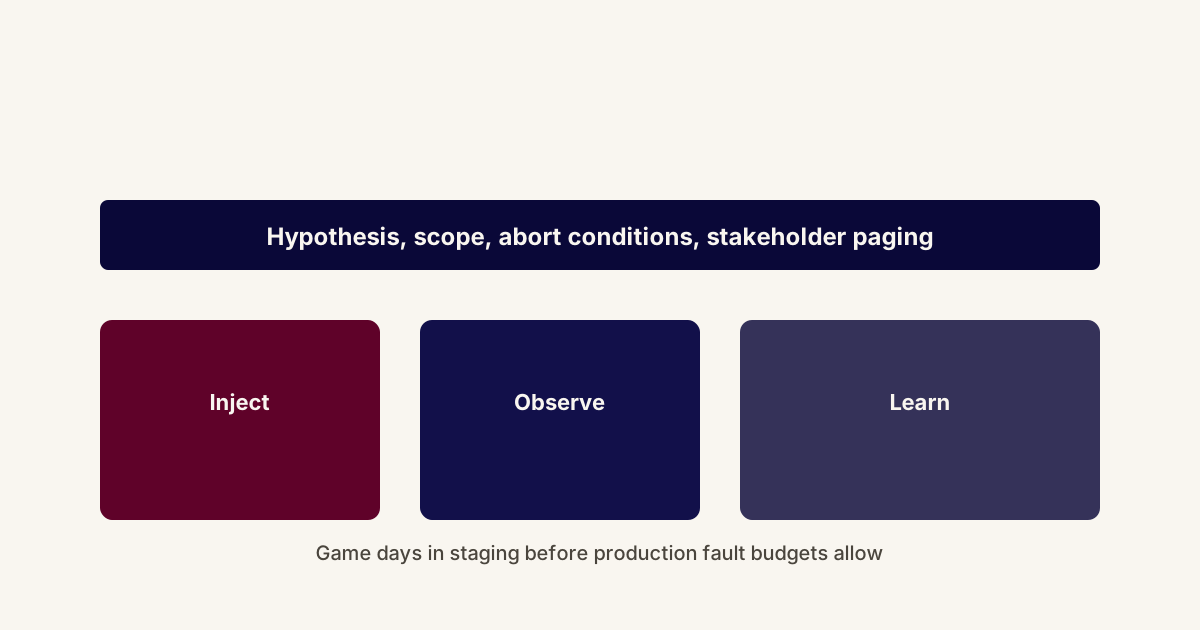
Production experiments require error budgets and customer communication rules. If you are in a breach of SLO, freeze chaos until reliability recovers. Respect maintenance windows and regional holidays.
Abort conditions should be automated where possible: latency thresholds, error rate spikes, saturation signals. Human judgment remains for nuanced customer impact that metrics lag.
Stakeholder paging must be explicit. Product owners and support leads should know when experiments run. Surprise is the enemy of trust.
Document learnings as tickets with owners. An experiment without remediation is entertainment. Prioritize fixes that reduce correlated failure across zones.
Security and compliance teams may restrict certain fault types in regulated environments. Data destruction simulations belong in tightly scoped sandboxes with synthetic data.
Metrics for leadership include reduction in undiscovered single points of failure, faster incident mitigation after targeted drills, and percentage of services with defined resilience SLOs.
Finally, rotate facilitators so resilience skills spread. A single chaos champion becomes a bottleneck and a vacation risk.
We facilitate small-group sessions for customers and prospects without requiring a slide deck, focused on your stack, constraints, and the decisions you need to make next.