Insights · Article · Data & AI · Apr 15, 2026
Federated governance, domain ownership, and platform funding models that keep data products real instead of becoming another slogan on a slide.
Data mesh promises decentralized ownership with centralized standards. The failure mode is mesh theater: new vocabulary, same bottlenecks, and platform teams buried under custom requests they never scoped as products.
Begin by defining domains with clear business boundaries, not only by database schemas. Each domain names a product owner for data, not only a technical custodian. Product thinking includes roadmaps, SLAs, and consumer feedback.
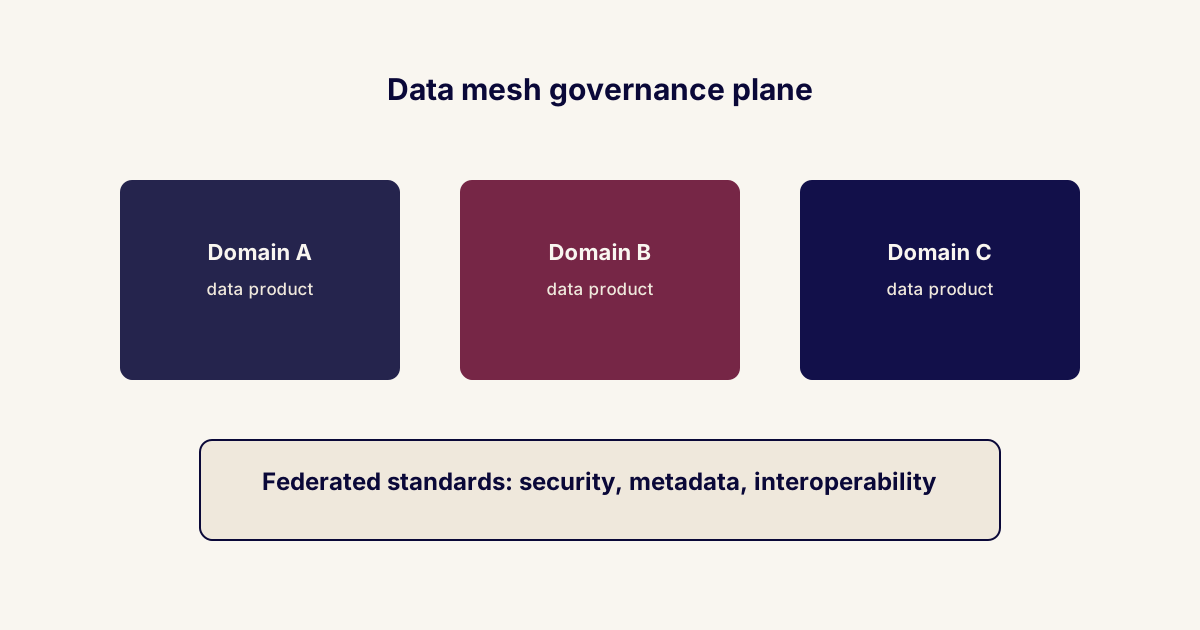
Federated governance needs a thin center of excellence that publishes patterns for security, metadata, interoperability, and observability. The center should not become a ticket factory; it should provide templates, training, and compliance guardrails.
Self-serve infrastructure must be real. If provisioning a governed data store still requires a six-week ticket, domains will build shadow lakes. Platform squads should measure time-to-first-compliant dataset.
Financial models vary. Chargeback, central funding with showback, or hybrid approaches can work if incentives align. Domains should feel both autonomy and accountability for quality incidents.
Metadata catalogs are not optional decoration. Contracts, schemas, and lineage should be enforced in CI for published datasets. Consumers trust products they can inspect programmatically.
Migration strategy matters. Strangler patterns that expose legacy sources through mesh interfaces reduce big-bang risk. Celebrate early domains that prove value before mandating enterprise-wide cuts.
Change management includes legal and compliance partners early. Cross-domain sharing of sensitive attributes needs consistent policy engines, not ad hoc emails between friendly analysts.
Measure outcomes: reuse of datasets, reduction in duplicate pipelines, and faster time to answer for repeated business questions. Vanity counts of published tables hide emptiness.
We facilitate small-group sessions for customers and prospects without requiring a slide deck, focused on your stack, constraints, and the decisions you need to make next.