Insights · Article · Engineering · Apr 28, 2026
Routing rules, synchronous options, session stickiness, and UX patterns when eventual consistency meets user expectations shaped by single-writer apps.
Read replicas efficiently reduce aggregate query load on primary writer nodes and dramatically improve data locality for global client users. They absolutely introduce unavoidable replication lag that violently breaks strong assumptions secretly baked into popular object relational mappers and traditional user interface flows. Normal users who explicitly save a major settings profile and immediately refresh their browser screen will logically expect to instantly see their newest written configurations.
Begin your optimization journey by surgically measuring baseline replication lag percentiles per discrete replica instance and per specific workload query class. Without aggressive real time measurement, architectural debates remain strictly ideological and grounded in pure assumptions. Extreme upper tail communication lag matters far more for active incident response scenarios than tracking standard moving averages.
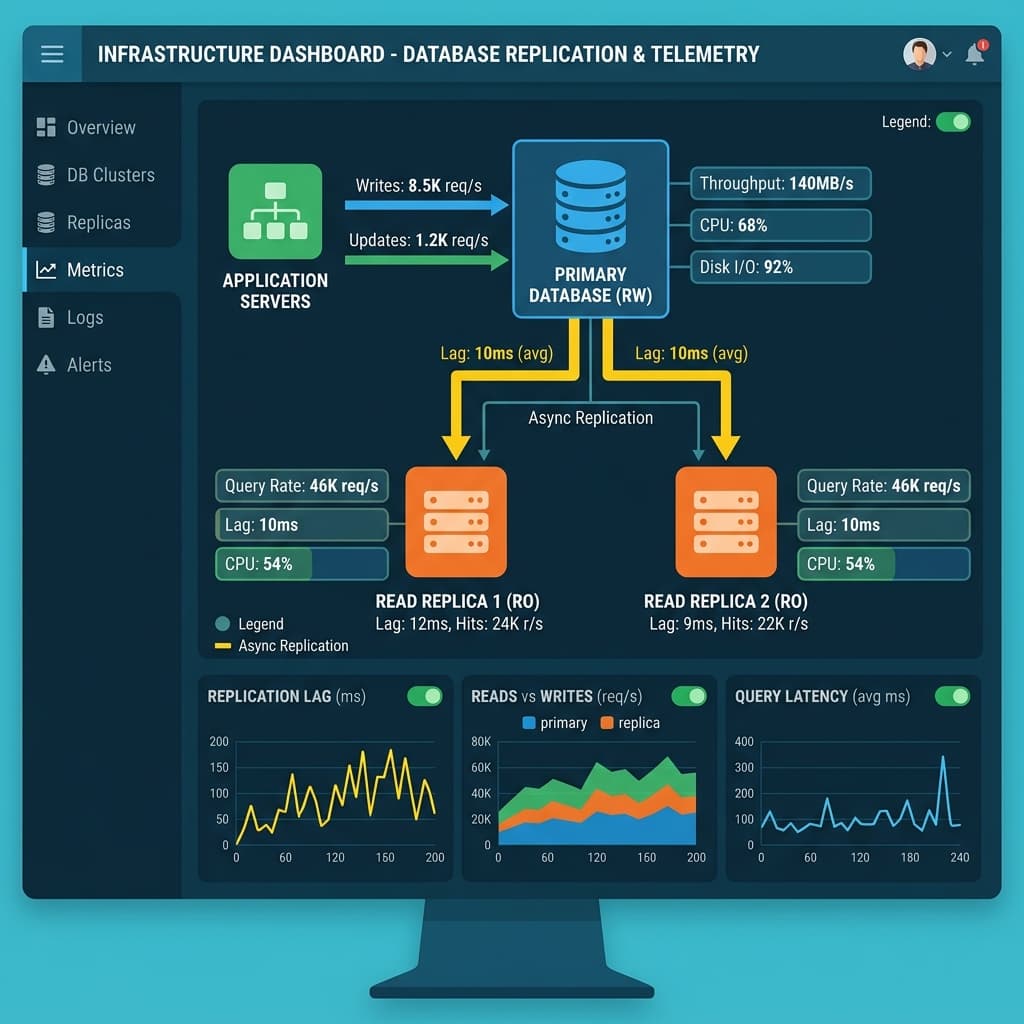
Smart traffic routing policies can deliberately send critical read operations directly to the primary instance, enforce rigid session connection stickiness specifically after complex write actions, or employ verifiable read your writes cryptographic tokens where the underlying distributed datastore explicitly supports them. You should strategically pick standard resilience patterns your engineering team can actually operate dependably at three in the morning.
Opaque network caching layers consistently complicate the consistency story significantly. A memory cache populated forcefully from a silently lagging secondary read replica effectively extends the perceived data staleness indefinitely. Always carefully configure your code to explicitly invalidate or drastically shorten time to live values on user scoped session keys immediately following any state mutations.
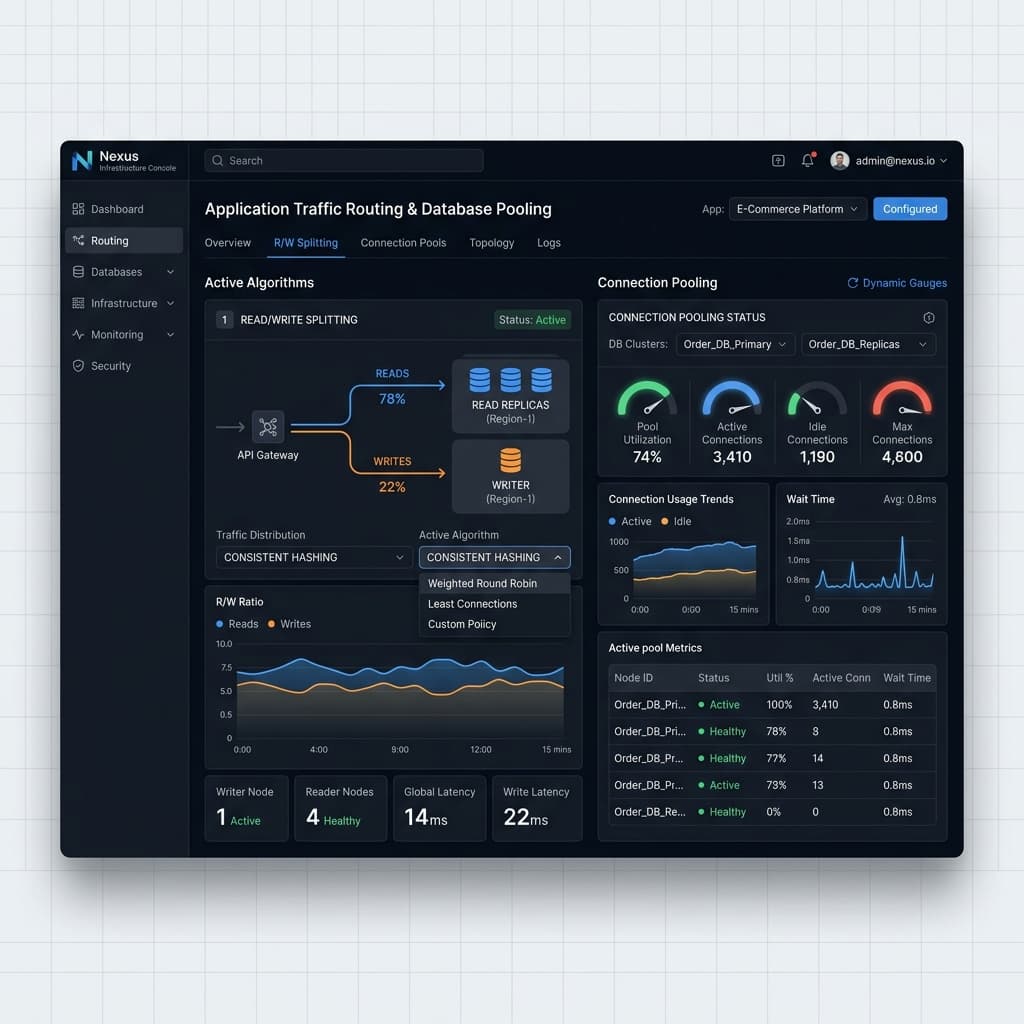
Fully synchronous replication directly trades overall system availability and query latency for much stronger mathematical consistency guarantees. You should use synchronous configurations incredibly sparingly, reserving them exclusively for strict financial ledger adjustments and other highly regulated domains where even milliseconds of stale data reads are legally or operationally unacceptable.
Clever frontend application patterns genuinely help preserve the core user experience when underlying network lag is architecturally unavoidable. Implementing optimistic interface updates and elegant loading skeletons practically reduce the perceived systemic failure rate even when the backend database state convergence ultimately lags by several full seconds.
Comprehensive operational recovery playbooks should thoroughly cover sudden replica promotion scenarios, rebuilding entire corrupted secondary replicas from scratch, and cleanly handling terrifying split brain networking scares. Practiced engineering runbooks consistently beat chaotic heroics during an active severity one incident.
Testing phases should absolutely include aggressive network chaos injection directly on critical replication links. Deliberately paused asynchronous replication pipelines should aggressively surface severe paging alerts long before confused customers accidentally find missing ghost data scattered across their primary analytical dashboards.
Finally, meticulously educate your core product managers on these distributed system realities. Technical feature specifications should always state their exact data consistency expectations explicitly so that the platform engineering crew does not have to guess the correct architectural approach under severe deadline pressure.
We facilitate small-group sessions for customers and prospects without requiring a slide deck, focused on your stack, constraints, and the decisions you need to make next.