Insights · Article · Cloud · Apr 3, 2026
Store gateways, sorting facilities, and moving fleets: how to keep workloads fast, offline tolerant, and observable from a central SRE function.
Deploying sophisticated edge computing infrastructure within massive retail environments and distributed logistics fleets requires completely predictable system behavior when wide area network links inevitably degrade. Strong reference patterns must clearly dictate which specific computational decisions must execute completely locally, which complex analytics can securely wait for delayed cloud synchronization, and exactly how engineering teams automatically detect split brain data scenarios before they trigger catastrophic inventory allocation chaos.
Engineering teams must strongly begin with rigorous workload classification. Point of sale transactional resilience, rapid barcode package scanning latency, and physical safety telemetry systems operating on the warehouse floor possess entirely different regulatory compliance mandates. You must comprehensively document each unique functional class with explicit non functional requirements that centralized architects can continuously test via automated chaos engineering.
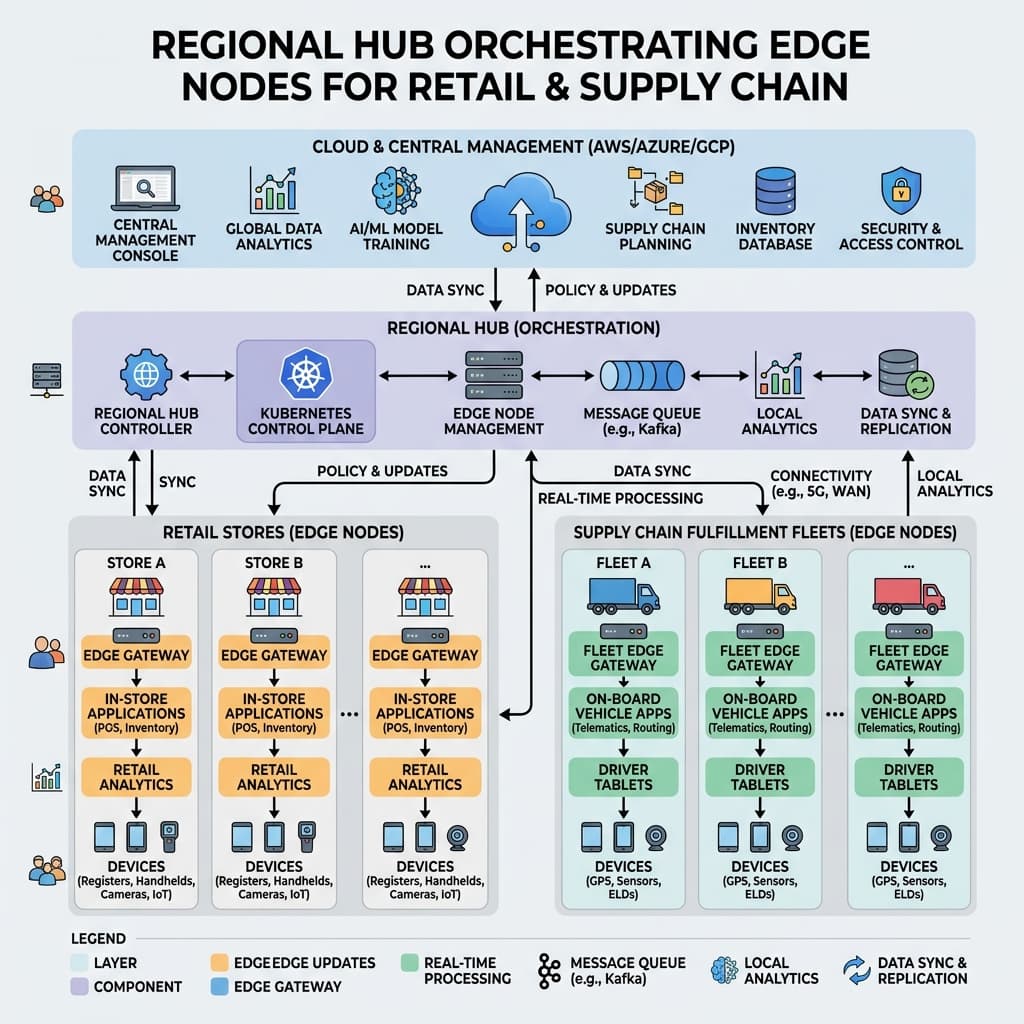
Running native containerized microservices operating correctly at the extreme tactical edge remains incredibly attractive but demands extraordinarily disciplined continuous release engineering. Verifiable golden container images, cryptographically signed deployment bundles, and highly controlled staged rollout pipelines matter substantially more when an enterprise cannot realistically individually debug one thousand separate retail store racks overnight.
Cryptographic identity management and secure digital secrets require highly specialized operational care. Utilizing broad shared service identity accounts stretched across thousands of physical devices predictably creates massive security blast radiuses. Architects must deliberately prefer strict device bound credentials, heavily restricted short lived tokens, and completely centralized revocation infrastructure paths that successfully function even when fully half your logistics fleet operates entirely offline.
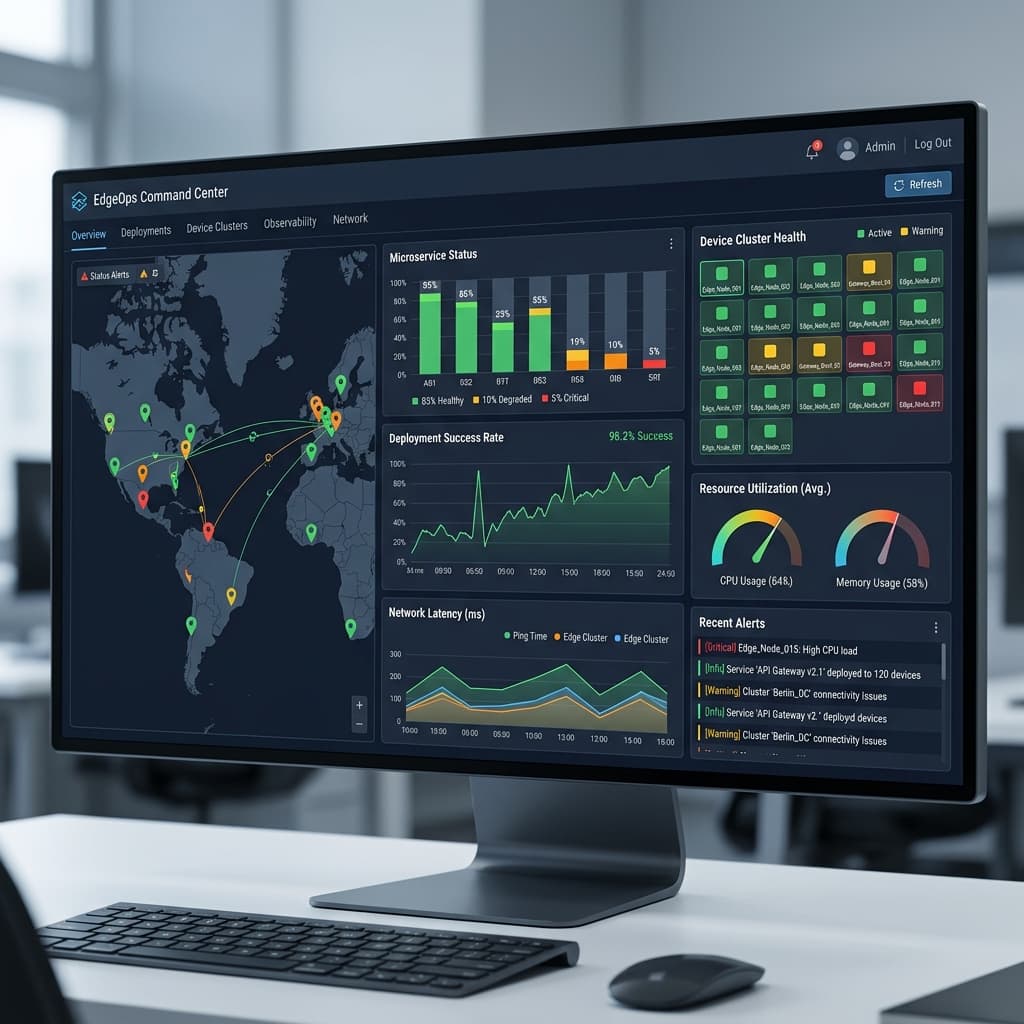
Telemetry and operational observability pipelines should elegantly fan in upstream without completely drowning the delicate wide area network connections. Implement robust local disk buffering pools, intelligent dynamic sampling rates, and dedicated priority network channels exclusively reserved for critical safety and core revenue impacting signals. Central platform engineering teams absolutely need sufficient detailed telemetry deployed to fully support rapid incident resolution without automatically shipping every single verbose debug log northbound.
Strict enterprise data governance frameworks functionally follow the underlying physical workload. Deliberately minimizing sensitive customer personally identifiable information residing locally at the extreme physical edge massively reduces theoretical breach impacts and gracefully simplifies complex cross border compliance rules. Security executives must decide explicitly what specific datasets safely anonymize locally versus exactly what raw telemetry must synchronize globally for wider enterprise analytics.
Platform engineering must meticulously test aggressive disaster scenarios including complete regional cloud infrastructure outages, total overarching domain name system failures, lateral ransomware infections isolating a primary store controller, and catastrophic supplier application programming interface degradation severely impacting peak holiday shopping seasons. These tactical tabletops should functionally include operations managers and external logistics partners.
Fiscally responsible executives should routinely compare traditional massive heavy capital expenditures required for customized on premise physical hardware directly against the continuous operational subscription spend necessary for centrally managed distributed edge appliances and dedicated cellular connectivity. The optimal financial answer wildly varies depending on exact geographic store counts, depreciation refresh cycles, and whether the enterprise already operates a proprietary private networking backbone.
Finally, always cleanly close the internal feedback loop with an actively maintained architecture decision record repository. Foundational edge computing decisions notoriously age incredibly quickly as major cloud computing vendors constantly merge new overlapping platform features. Maintained architectural records gracefully help newly hired engineering leaders fundamentally understand exactly why a weird legacy pattern genuinely exists.
We facilitate small-group sessions for customers and prospects without requiring a slide deck, focused on your stack, constraints, and the decisions you need to make next.