Insights · Article · Operations · Apr 24, 2026
Translate burn rates, customer journeys, and feature freeze decisions into narratives CFOs and directors understand without drowning them in percentile jargon.
Error budgets connect reliability investment directly to product engineering trade offs. Executives engage when budgets align precisely with revenue impacting journeys, regulatory uptime mandates, and explicit choices about shipping velocity versus system stabilization.
Start with a very small set of service level objectives tied to actual customer language. Measure checkout flows, login success rates, and claims processing timelines instead of only tracking internal microservice health metrics. Map complex architectural dependencies quietly in appendix material so you do not overwhelm the core board message.
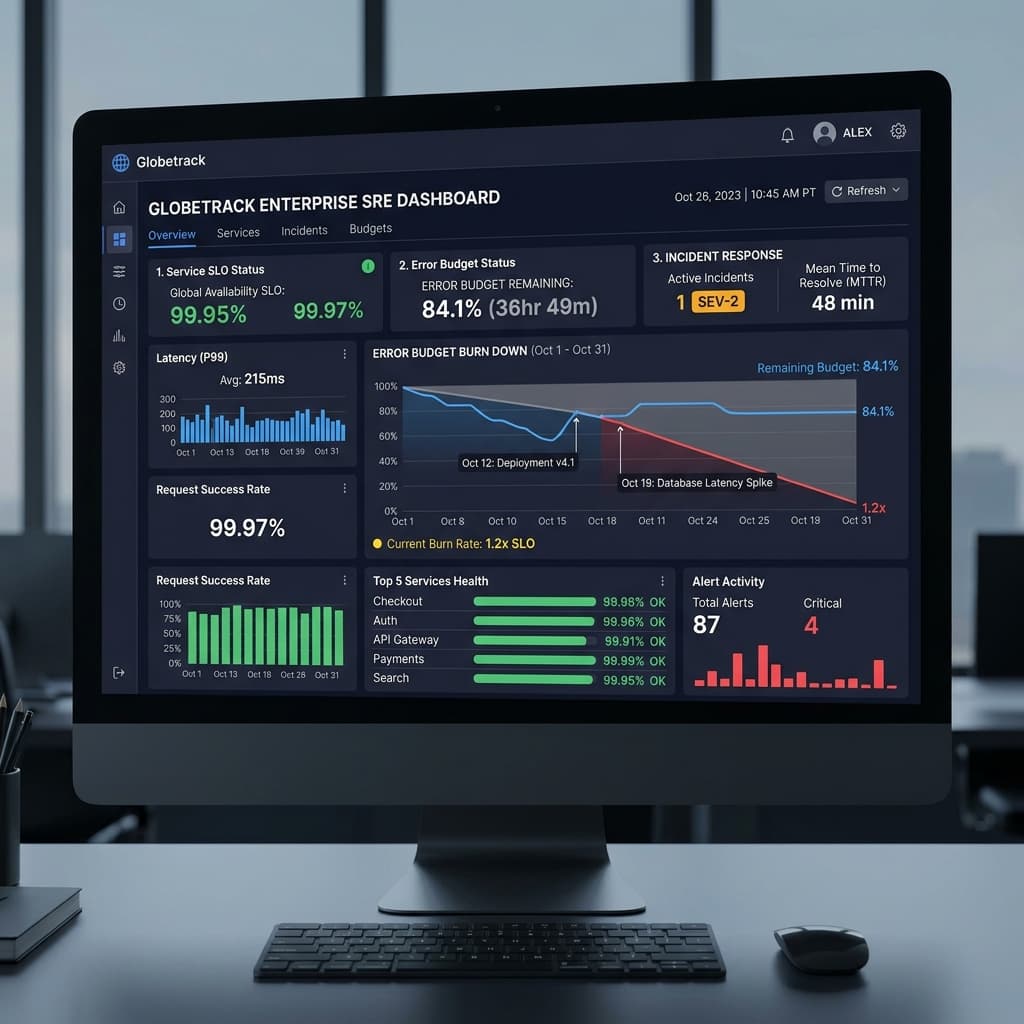
Burn rate trajectory matters significantly more than a single bad day. Show multi window views that display remaining budget this current month, the projected exhaustion date at the current burn rate, and highlight specific incidents that consumed a disproportionate share of the available margin. This shifts the executive conversation from panic to resource planning.
When error budgets actually exhaust, recovery policies should be absolutely pre agreed. Implementation of a strict feature freeze, redirecting engineering capacity to technical debt, or formal executive risk acceptance with a specifically named approver are standard responses. Ad hoc debates during major outages waste precious minutes and destroy team morale.

Finance leaders should clearly see the exact correlation between reliability spending and proactive incident reduction. Deploying massive capital for database redundancy or establishing active regional failover architectures deserves the identical rigorous justification as speculative product bets.
Customer communications belong prominently in the regular operational narrative. Maintaining transparent public status pages and publishing honest technical postmortems reduces long term customer churn far more effectively than pushing silent undocumented hotfixes in the middle of the night.
Avoid dashboard metric soup. If you present twenty distinct service level objectives at once, leadership will remember none of them. Curate exactly three major indicators that represent material business risk and focus entirely on those core numbers.
Board presentation packs need a comprehensive glossary appendix clearly defined once, rather than repeated on every single page. Teach foundational reliability terms one time, then reuse consistent visual metaphors quarter over quarter to build organizational literacy.
Finally, meticulously rehearse the difficult questions directors will inevitably ask. Prepare comparative performance benchmarks against industry peers, understand the exact cyber insurance claim implications of an outage, and map out legal regulatory notification thresholds. Thoroughly prepared answers build massive institutional trust.
We facilitate small-group sessions for customers and prospects without requiring a slide deck, focused on your stack, constraints, and the decisions you need to make next.