Insights · Article · Strategy · Apr 13, 2026
Algorithmic choices, infrastructure right-sizing, and carbon-aware scheduling that engineers can implement without waiting for a perfect emissions data lake.
Sustainability discussions often stall waiting for perfect carbon accounting. Application teams can still reduce waste today: fewer redundant queries, leaner payloads, and workloads matched to actual CPU and memory needs.
Start with profiling before buying offsets. Identify hot paths, N+1 database patterns, and caches that never hit. Efficiency gains often improve customer latency simultaneously.
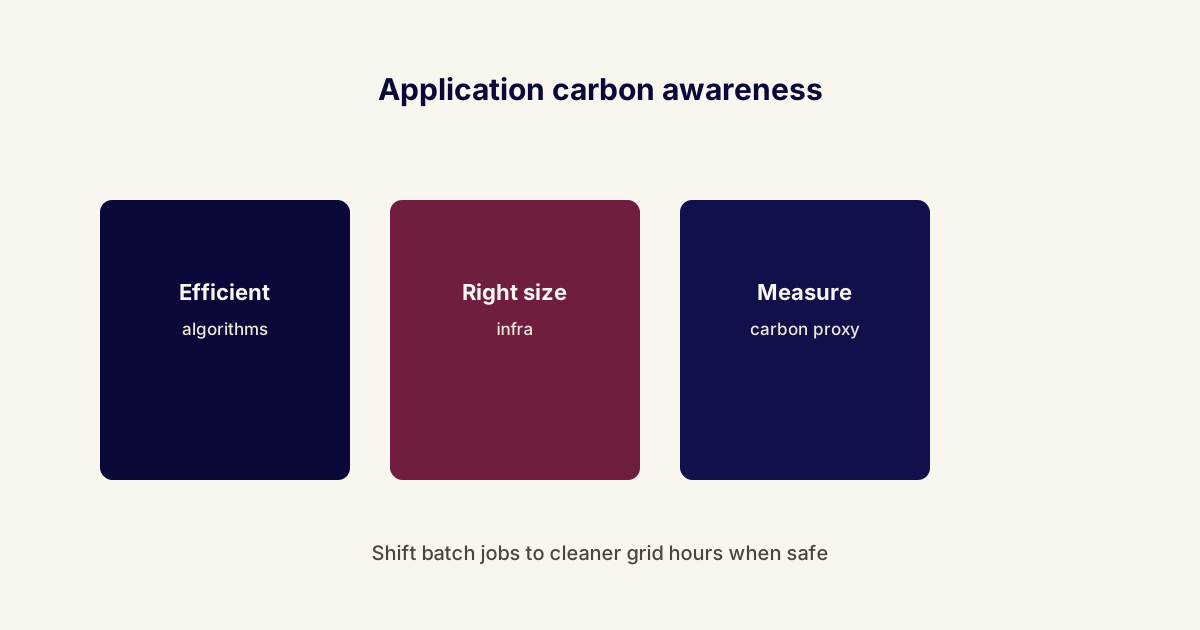
Batch and training jobs can shift to cleaner grid hours when deadlines allow. Policy engines should enforce safety windows so shifting does not break SLAs or compliance cutoffs.
Autoscaling discipline prevents idle clusters pretending to be resilience. Minimum instance counts should reflect real traffic patterns, not fear from three years ago.
Frontend engineering matters. Image optimization, lazy loading, and reduced client-side JavaScript cut device energy and data transfer. Mobile users feel the difference immediately.
Finance and sustainability teams should see engineering KPIs they recognize: cost per transaction, utilization, and trend lines after efficiency sprints. Translation beats purity.
Vendor selection can include efficiency claims, but verify with benchmarks on your workloads. Marketing watts are not engineering watts.
Open source and shared libraries should be maintained to avoid abandoned dependencies that force oversized runtimes. Dependency hygiene is green hygiene.
Finally, celebrate incremental wins publicly. Engineers adopt habits when leaders notice kilowatt hours saved and dollars reclaimed, not only abstract planet points.
We facilitate small-group sessions for customers and prospects without requiring a slide deck, focused on your stack, constraints, and the decisions you need to make next.