Insights · Article · Engineering · Apr 5, 2026
Inventory, license policy, contribution rules, and security review hooks that let engineering move fast without courting legal surprise.
Every large enterprise consumes open source, whether or not a formal OSPO exists. Informal adoption creates inconsistent license risk, duplicate forks, and security patches that never propagate. A lightweight OSPO pays for itself by reducing chaos.
Start with an automated inventory tied to builds, not only spreadsheets. Link components to SBOM outputs where possible so vulnerability response and license questions share one source of truth.
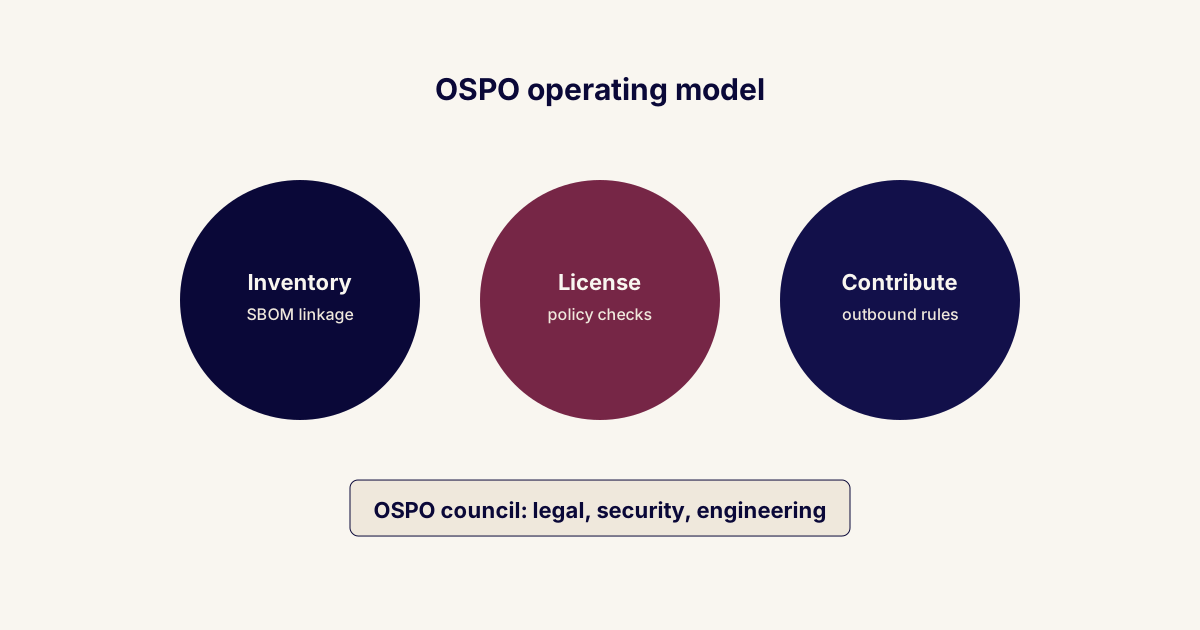
License policy should be short, opinionated, and maintained. Green lists speed approvals; yellow lists need legal review; red lists block by default. Ambiguous middle categories destroy trust if reviewers never decide.
Inbound contributions need hygiene: CLA processes, copyright headers where required, and secrets scanning before public pushes. Embarrassment is not the only risk; contractual breach can follow.
Outbound contributions benefit from clear rules about what can be shared, what requires manager approval, and what touches competitive advantage. Engineers appreciate predictability more than freedom without guardrails.
Security patching workflows should treat popular libraries as critical suppliers. Monitor advisories, test upgrades in sandboxes, and document exceptions when upgrades cannot land immediately.
Funding maintainers strategically reduces long-term risk. Sponsor projects your stack depends on and track health signals like maintainer churn. Philanthropy narratives help justify budget lines.
Training accelerates adoption of policy. Lunch sessions on common licenses, patent implications, and export controls prevent recurring mistakes. Refresh training when policies change.
Mature OSPOs publish annual transparency reports summarizing contributions, incidents, and policy updates. Public accountability improves internal discipline and external reputation.
We facilitate small-group sessions for customers and prospects without requiring a slide deck, focused on your stack, constraints, and the decisions you need to make next.