Insights · Article · Risk · Apr 4, 2026
Translate data subject rights, retention schedules, and purpose limitation into automated checks that developers cannot accidentally bypass.
Privacy engineering succeeds when policies become executable constraints rather than PDFs attached to tickets. That requires product managers, legal counsel, and platform engineers to agree on canonical definitions for personal data categories and processing purposes.
Begin with a lightweight data dictionary that links business terms to technical columns. Without that bridge, automation guesses wrong and auditors lose confidence. Invest in curation before you invest in more tools.
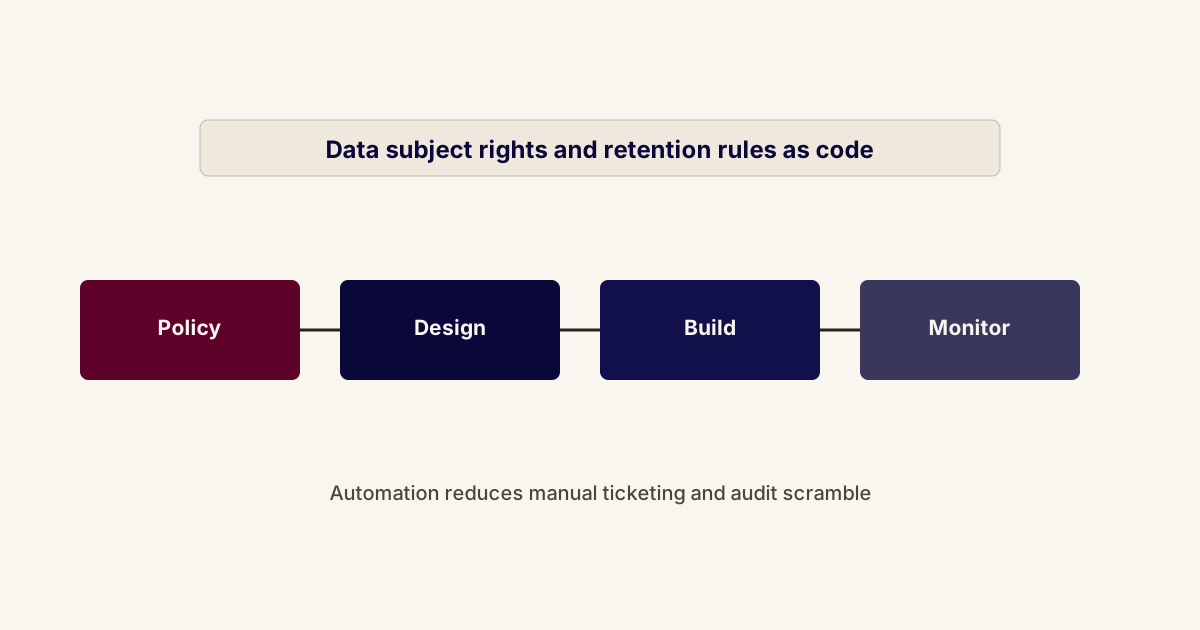
Design reviews should include privacy threat modeling for new data flows. Ask what happens when a downstream consumer adds a field to an export, when a model trainer copies a snapshot to a sandbox, or when retention clocks differ across regions.
Build-time checks validate schema changes against retention metadata, encrypt sensitive columns by default in approved patterns, and block merges when purpose tags are missing. The goal is fast feedback in CI, not a monthly committee to bless diffs.
Runtime monitoring closes the loop. Log access patterns, flag bulk exports, and correlate API activity with consent records where applicable. Alerts should route to named owners with runbooks, not to a shared mailbox.
Data subject rights workflows benefit from orchestration. When a deletion request arrives, systems should know which replicas, caches, and analytics projections require action. Manual spreadsheets do not scale past the first supervisory question.
Train customer support and operations on what engineered privacy can and cannot do. Overpromising instant erasure across every legacy archive destroys trust. Honest SLAs paired with transparent status pages outperform heroic manual heroics.
Measure outcomes: time to fulfill access requests, percentage of systems with automated retention enforcement, and audit findings related to privacy controls year over year. Metrics keep the program funded when leadership changes.
Partner with internal audit early. Show them test evidence generated by pipelines and sampled access logs. When audit sees repeatable controls, external examinations become less disruptive for engineering roadmaps.
We facilitate small-group sessions for customers and prospects without requiring a slide deck, focused on your stack, constraints, and the decisions you need to make next.