Insights · Article · Engineering · May 3, 2026
Query understanding, business signals, evaluation sets, and human judgment loops that keep merchandising goals aligned with customer language.
Search looks like an index problem until you realize it is a translation layer between how customers speak and how merchants describe SKUs. Pure textual similarity misses synonyms, negations, and seasonal intent.
Build golden query sets from support logs, null-result analytics, and top revenue paths. Without labeled examples, tuning becomes opinion ping pong.
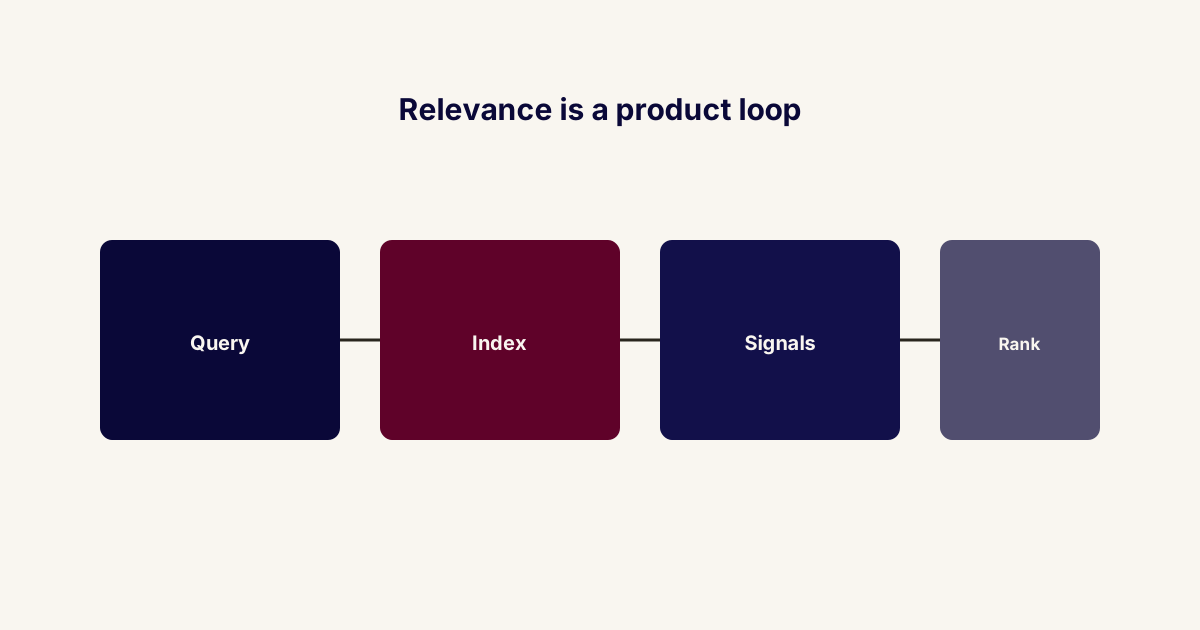
Business rules belong explicitly: margin guardrails, stock availability, and brand partnerships should surface as configurable boosts with audit logs, not hidden code branches.
Personalization helps until it creates filter bubbles that hide better fits. Blend personal signals with exploration metrics you monitor.
Latency budgets interact with retrieval stages. Two-phase retrieve then rerank patterns save cost if first stage recall is solid.
Offline metrics such as nDCG complement online A/B tests. Agreement between them builds confidence; divergence signals broken instrumentation or stale labels.
Accessibility and localization affect tokenization and stemming. Test multilingual catalogs with native queries, not only translated English assumptions.
Incident playbooks should cover bad deploys to ranking models and poisoned click logs. Rollbacks need one-click paths.
Finally, schedule quarterly relevance reviews with merchandising, not only engineering. Joint ownership prevents silent drift.
We facilitate small-group sessions for customers and prospects without requiring a slide deck, focused on your stack, constraints, and the decisions you need to make next.