Insights · Article · Security · Apr 10, 2026
Practical patterns for short-lived credentials, coordinated rollouts, and verification hooks so security gains do not become deployment phobia.
Secrets rotation sounds simple until you discover a batch job nobody owns still using a key from three years ago. Programs that succeed treat secrets as products with owners, consumers, measurable expiry, and automated issuance where possible.
Start by inventorying static credentials: long-lived API keys in configuration stores, embedded passwords in legacy services, and break-glass accounts that bypass normal IAM. Each category needs a migration path, not only a policy statement.
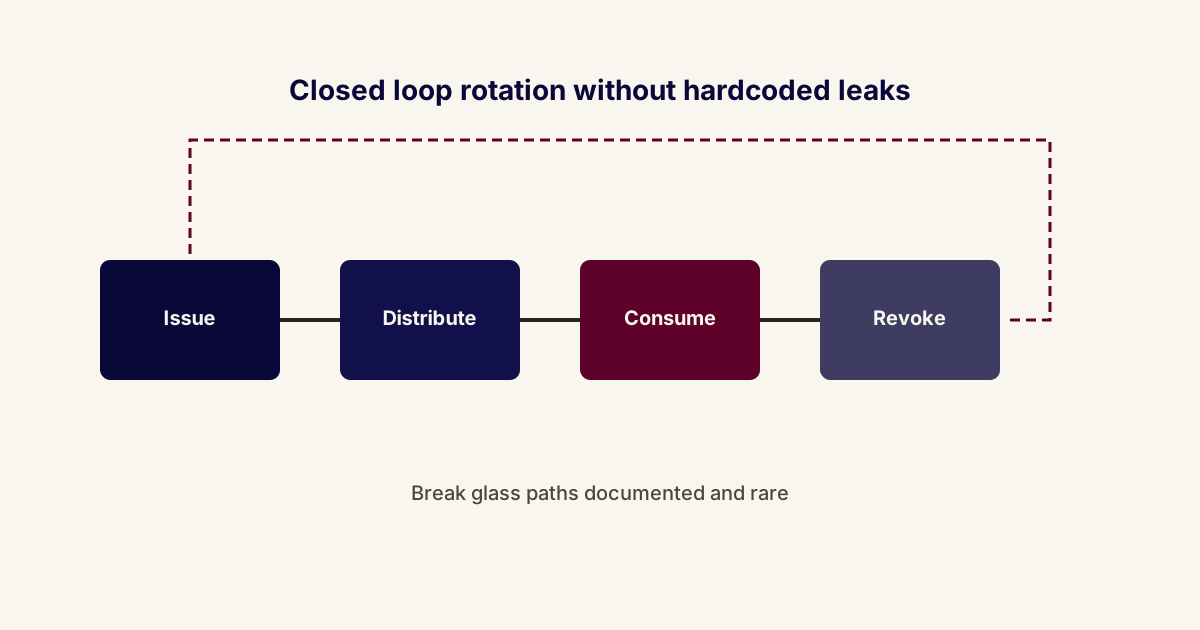
Short-lived tokens reduce blast radius but increase coordination. Service meshes, workload identity, and cloud provider IAM roles should be the default for new systems. Older systems may need sidecar proxies or scheduled credential pushes with health checks.
Rollout sequencing matters. Rotate consumers before issuers when both must change, or use overlapping validity windows with dual acceptance tests. Canary namespaces catch mistakes before a fleet-wide outage.
Verification belongs in CI and in production probes. Synthetic transactions should fail loudly when authentication breaks, rather than waiting for customers to notice silent partial failures.
Human break-glass paths remain necessary. Vault them, monitor their use, and practice revocation. Post-incident reviews should include whether rotation delays extended harm.
Communicate with application teams using empathy and precision. A calendar invite titled mandatory rotation Friday invites shadow shortcuts. Publish runbooks, office hours, and rollback steps instead.
Metrics that resonate with leadership include percentage of services on automated rotation, mean credentials age, and incidents tied to expired or leaked secrets year over year. Trend lines justify platform investment.
Finally, align with compliance mapping. Many frameworks ask for periodic password changes; modern architectures reinterpret that intent as proof of dynamic credential control. Document equivalency so auditors understand the design.
We facilitate small-group sessions for customers and prospects without requiring a slide deck, focused on your stack, constraints, and the decisions you need to make next.