Insights · Article · Cloud · May 6, 2026
Certificate lifecycles, trust bundle rotation, sidecar resources, and when to simplify east-west policy before mesh operations become their own product team.
Mutual TLS between services raises the floor against spoofing and casual lateral movement. It also multiplies certificates, identities, and failure modes when rotation blips or trust bundles desync across clusters.
Start with identity standards: SPIFFE style identifiers, centralized issuers, and automated rotation shorter than your mean time to detect incorrect issuance. Humans should not paste certs into chat.
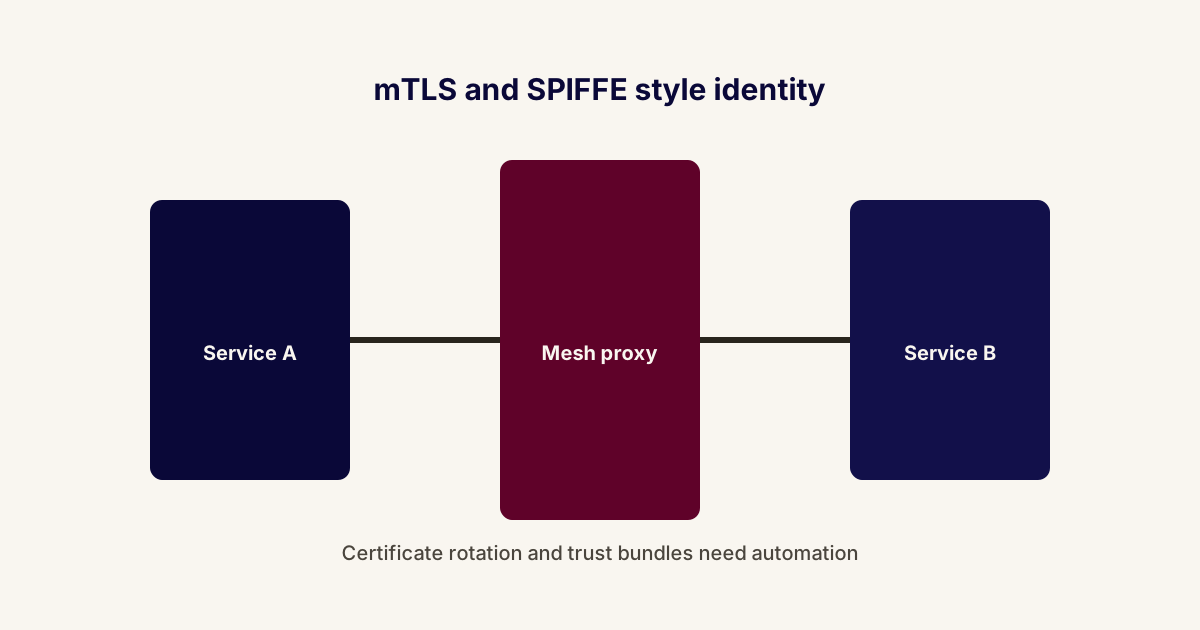
Resource planning must include sidecar overhead at peak. Capacity models that ignore mesh proxies invite throttling surprises during marketing events.
Policy authoring should stay approachable. If only three people understand authorization rules, on-call will break glass constantly. Prefer readable policy languages and reviewed templates.
Multi-cluster and multi-cloud meshes need explicit trust federation stories. Rotating a root of trust without choreography drops traffic silently in some implementations.
Observability should correlate mTLS handshake failures with client versions and rollout windows. Otherwise engineers blame the network generically.
Escape hatches for debugging exist; guard them. Temporary plaintext taps belong in audited tools with time limits, not tcpdump folklore.
Revisit mesh value periodically. Some organizations graduate to simpler overlays once baseline mTLS moves into the platform. Avoid dogma.
Finally, train platform on-call on PKI basics. Incidents at 3 a.m. are faster when responders understand chains, intermediates, and SANs.
We facilitate small-group sessions for customers and prospects without requiring a slide deck, focused on your stack, constraints, and the decisions you need to make next.