Insights · Article · Security · Apr 5, 2026
How enterprises connect SBOM generation, vendor evidence, and runtime monitoring so supply chain risk reviews stay continuous instead of annual.
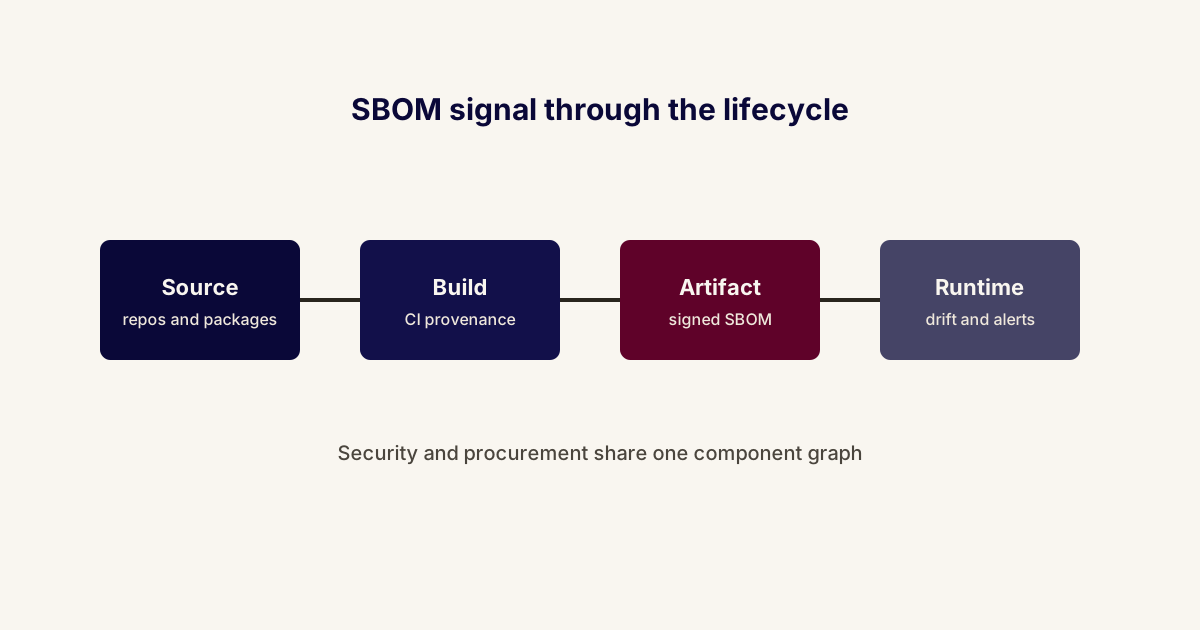
Software bills of materials stopped being a niche compliance topic when procurement teams realized renewals depend on answers security cannot produce from memory. SBOMs work best when they sit between build pipelines, contract repositories, and vulnerability response playbooks.
Start with scope honesty. Not every legacy binary will produce a perfect SPDX or CycloneDX file on day one. Publish a coverage map that shows which business services have machine-readable SBOMs attached to releases, and which still rely on transitional attestations.
Procurement should ask for SBOM delivery as part of material software purchases, not as a voluntary appendix. Tie acceptance criteria to formats, signing expectations, and update cadence when vendors ship patches.
Security operations needs more than a ZIP file at contract signing. Integrate SBOM identifiers with your vulnerability management backlog so when a critical library spikes in the news, you can query impact in minutes instead of opening tickets across fifty teams.
Legal and risk teams care about license obligations and export considerations. SBOM metadata can surface transitive dependencies that quietly trigger copyleft or redistribution duties. Early visibility prevents last-minute release freezes.
Runtime drift is the silent killer of SBOM programs. Containers rebuilt from floating tags and emergency hotfixes can diverge from the document you archived. Pair SBOMs with immutable artifact registries and deployment manifests that reference digests.
We recommend a quarterly executive summary: coverage percentage, mean time to answer whether you are affected, and vendors who missed SLAs for SBOM updates. The summary should fit on one page so committees actually read it.
For open source heavy stacks, sponsor maintainers where you can and fund internal tooling that reduces false positives. SBOM value collapses when scanners flood teams with noise they learn to ignore.
Finally, practice failure. Run a tabletop where a widely used library is compromised and your SBOM query returns ambiguous results. Use the lessons to tighten fields, ownership, and integration tests that validate SBOM presence on every release train.
We facilitate small-group sessions for customers and prospects without requiring a slide deck, focused on your stack, constraints, and the decisions you need to make next.