Insights · Article · Strategy · May 10, 2026
Component design, subscriber notifications, incident versus maintenance language, and the difference between marketing green and operational truth.
Customers forgive outages they understand faster than outages buried under all systems operational banners. A useful status page is an operational product with owners, SLAs, and editorial standards.
Group components by customer-visible capability, not by internal service name. Nobody outside your org knows what service mesh east means, but they know login and checkout.
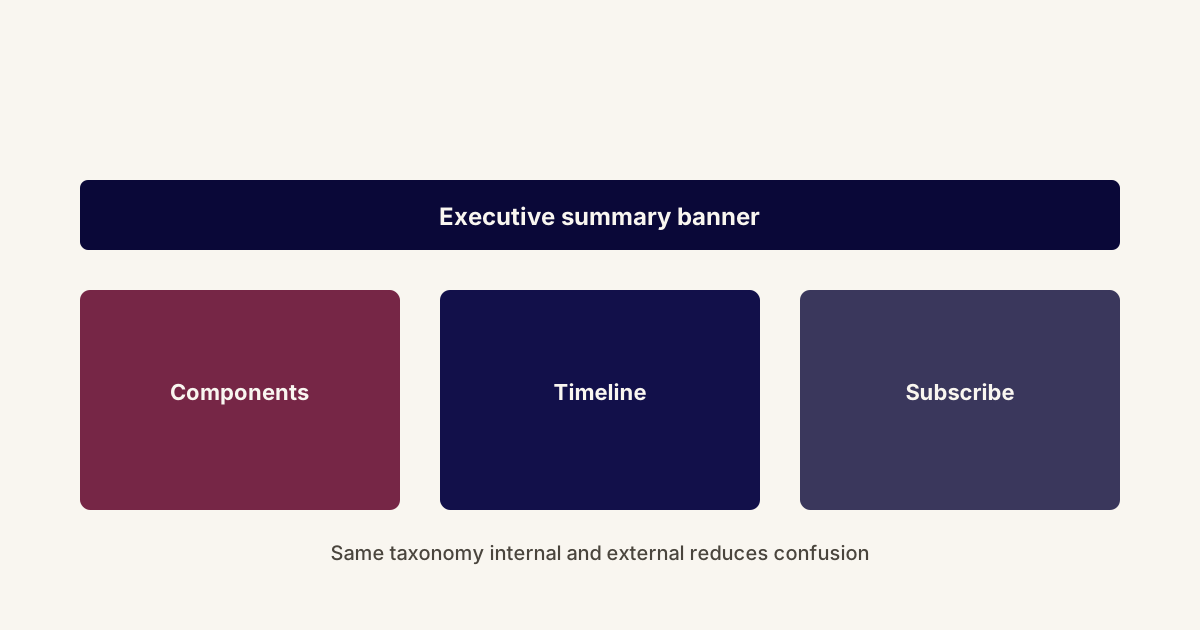
Distinguish degraded from down. Partial impairment with workarounds deserves amber states and concrete guidance, not binary failure.
Maintenance windows need start and end expectations, rollback plans, and post-event validation notes. Silent extensions erode trust more than a two hour slip explained honestly.
Notification streams should respect frequency caps and severity filters. Paging subscribers for informational posts trains them to ignore real incidents.
Integrate with support tooling so agents see the same incident IDs customers see. Divergent narratives amplify frustration.
Archive and search matter. Regulators, enterprise buyers, and your own postmortems need historical accuracy without PDF scavenger hunts.
Measure time to first public update, update cadence during long incidents, and subscriber satisfaction surveys after major events. Vanity uptime percentages without narrative are obsolete.
We facilitate small-group sessions for customers and prospects without requiring a slide deck, focused on your stack, constraints, and the decisions you need to make next.