Insights · Article · Operations · Apr 17, 2026
When controlled probes beat RUM, when RUM is non-negotiable, and how to build SLOs that combine both without double counting outages.
Site reliability teams need to know when customers suffer before customers tell them. Synthetic monitoring provides repeatable checks from known locations; real user monitoring captures actual device, network, and geography diversity. Neither alone tells the full story.
Synthetic shines for baseline availability, third-party API dependencies, and multi-step transactions you can script with stable selectors. It fails when scripts drift after UI refactors or when bots get rate-limited differently than humans.
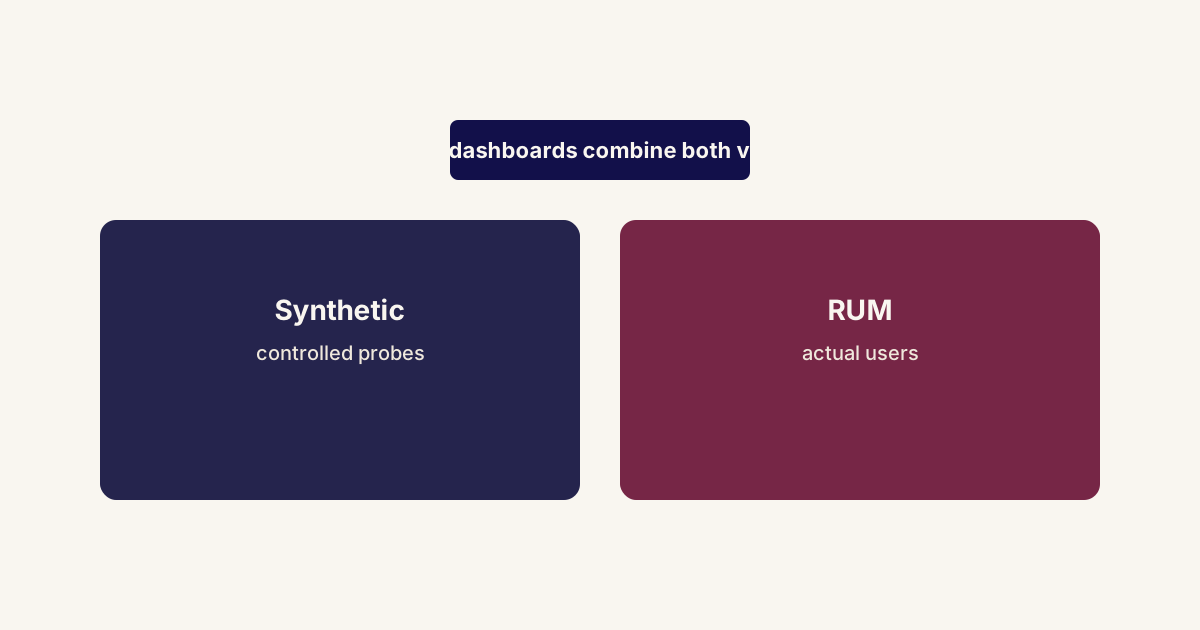
RUM captures long-tail pain: low-end phones, congested mobile networks, ad blockers affecting instrumentation, and regional CDN variance. Privacy regulations constrain what you collect, so design sampling and retention carefully.
SLO design should avoid double counting the same outage. If synthetics already alert on API health, RUM can focus on front-end vitals and conversion-adjacent latency. Document the split.
Alerting thresholds need different baselines per channel. Mobile apps tolerate different patterns than desktop web. Seasonality matters for retail peaks.
Dashboards for executives should translate technical metrics into customer journeys: checkout, login, claims submission. Journey framing earns budget for remediation.
Testing environments benefit from synthetic checks gating releases. Production benefits from RUM regression detection after deploys. Pair canary analysis with RUM cohorts.
Cost management includes data volume for RUM and probe frequency for synthetic. Excessive granularity increases bills without improving decisions.
Finally, review tooling annually. Consolidating vendors can reduce agent overhead, but only if telemetry quality stays equal or better.
We facilitate small-group sessions for customers and prospects without requiring a slide deck, focused on your stack, constraints, and the decisions you need to make next.