Insights · Report · Industry · Apr 28, 2026
Co-op data pools, equipment telemetry, buyer provenance claims, and farmer trust patterns for agritech platforms connecting field IoT to downstream markets.
Precision agriculture generates high-resolution yield, soil, and input data that farmers rightly view as competitive and personal. Platforms that centralize telemetry without transparent governance lose adoption and invite regulatory questions where subsidies or environmental reporting intersect.
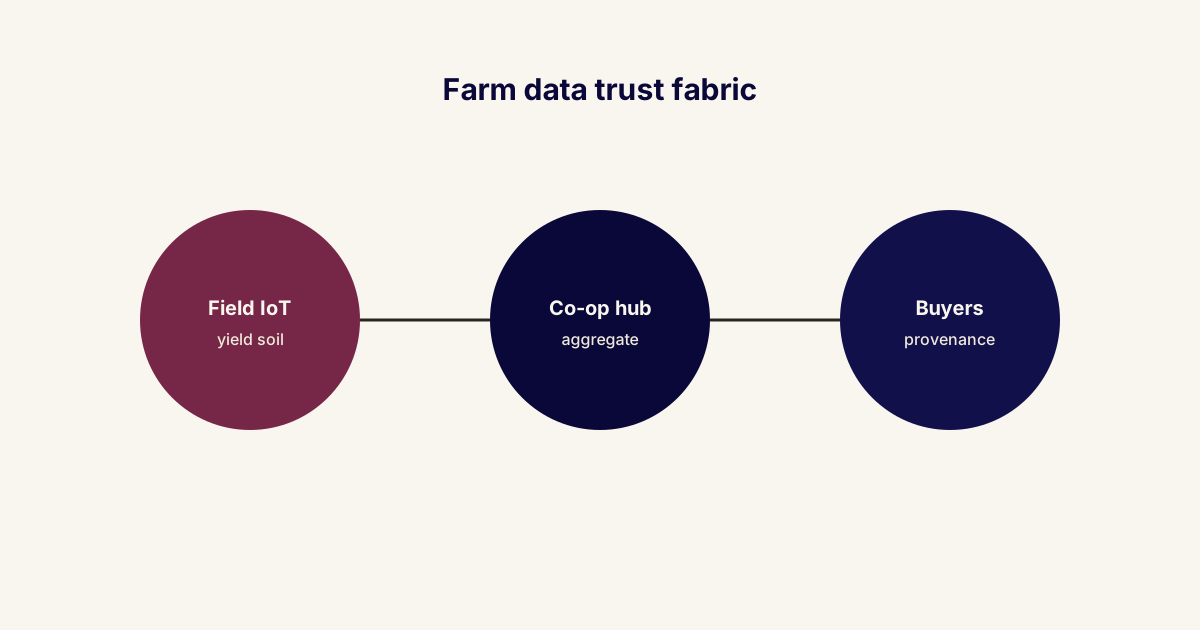
The report proposes cooperative aggregation models with explicit opt-in scopes: anonymized benchmarks, buyer-facing provenance, and research partnerships. Each scope maps to retention, revocation, and revenue sharing language farmers can verify.
Equipment OEMs and cloud analytics vendors complicate custody chains. Contracts should clarify who may train models on raw telemetry, who stores backups, and how firmware updates affect data ownership.
Downstream buyers want traceability for sustainability claims. Link cryptographic anchors or immutable logs only where they add evidentiary value; avoid blockchain theater that increases cost without audit benefit.
Connectivity and power constraints in rural regions affect pipeline design. Edge preprocessing, store-and-forward queues, and tolerant sync windows belong in architecture reviews, not only footnotes.
Cybersecurity extends to GPS spoofing risks, ransomware against cooperatives, and compromised weather app integrations. Segment OT-adjacent controllers from enterprise IT with the same seriousness as industrial firms.
Metrics for program health include farmer participation rate, data freshness SLAs, and dispute resolution time when a buyer challenges a batch certificate.
We close with policy templates aligned to common cooperative bylaws and sample DPIA questions for cross-border grain traders.
We can present findings in a working session, map recommendations to your portfolio and risk register, and help you prioritize next steps with clear owners and timelines.