Insights · Report · Operations · Mar 16, 2026
What separates scripted exercises from adaptive rehearsals, and how firms connect BCDR evidence to technology incident response without duplicating work.
Tabletop exercises earn skepticism when participants read scripts and conclude success without making decisions. The maturity study catalogs behaviors that correlate with shorter customer-impacting outages in real events, based on anonymized interviews across financial services, healthcare, and global retail.
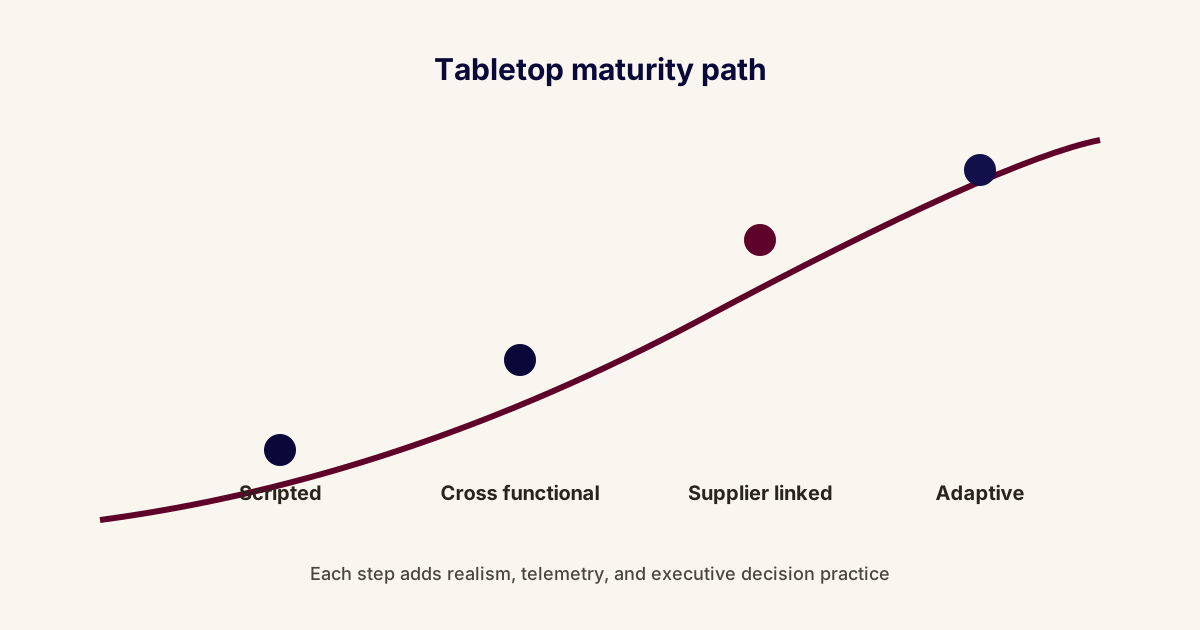
Level one programs run annually, focus on a single department, and rarely include suppliers. Level four programs rotate scenarios quarterly, inject communication failures, and require executives to practice regulatory notifications with realistic time boxes.
A recurring theme is integration with technology incident response. When BCDR teams and SRE teams maintain separate runbooks, executives receive conflicting timelines. The study recommends a unified crisis channel with clear authority rules and a single customer-impact narrative.
Data backups participate in the story. Organizations that test restores as part of tabletops discover silent corruption, credential rotation gaps, and region failover assumptions that never survived contact with production dependencies.
We provide scenario libraries: ransomware with selective data destruction, cloud region loss, third-party SaaS outage during month-end, and partner API degradation during a marketing launch. Each scenario lists minimum participants, pre-reads, and success criteria.
Metrics matter after the exercise. The study suggests tracking time to activate crisis communications, time to convene legal and privacy, and percentage of critical systems with validated recovery objectives that match board-approved tolerances.
Procurement and business continuity teams can use the vendor chapter to negotiate joint exercises into contracts. The best suppliers arrive with telemetry feeds and named technical counterparts, not only a PDF certificate of business continuity.
The final section addresses remote and hybrid work. Crisis leadership habits that worked in a conference room need deliberate redesign when participants join from multiple time zones. Small facilitation details change outcomes more than expensive simulation software.
We can present findings in a working session, map recommendations to your portfolio and risk register, and help you prioritize next steps with clear owners and timelines.