Insights · Report · Strategy · May 4, 2026
Activity data pipelines, emission factor governance, audit trails for removals, and disclosure readiness when investors compare software-generated footprints across portfolios.
Climate software vendors promise automated footprints, yet assurance failures appear when activity data is stale, factors are mismatched to geography, or removals lack durable evidence. Buyers should evaluate platforms like financial systems, not marketing widgets.
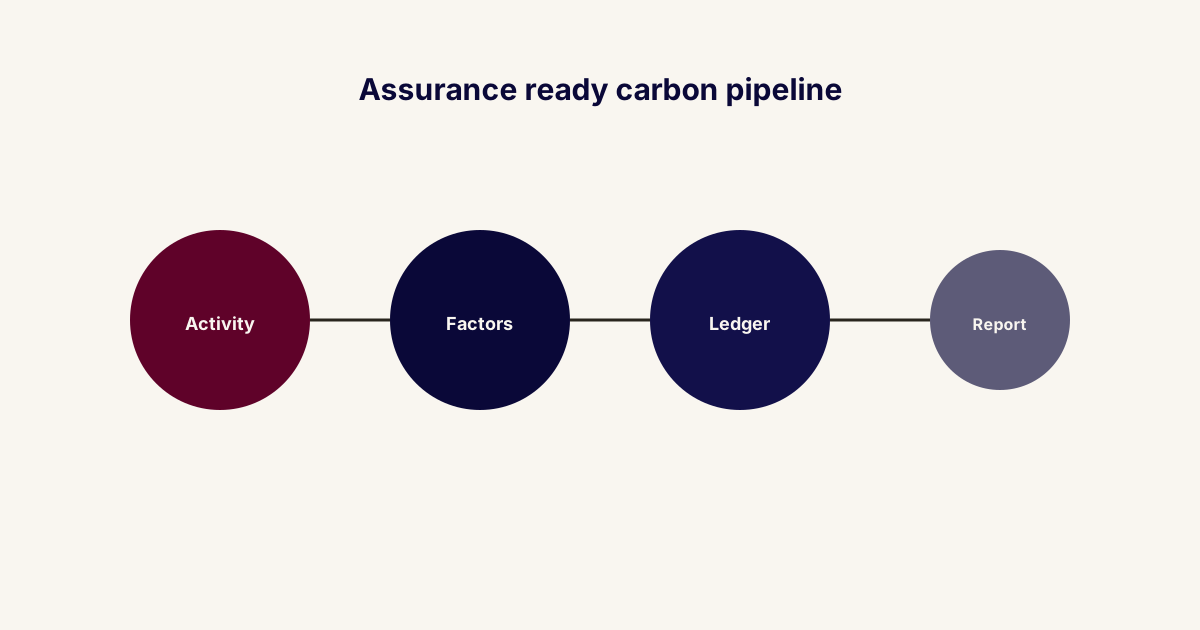
This outlook sequences ingestion, normalization, factor application, uncertainty bands, and disclosure exports. Each step needs owners, version history, and change approvals suitable for external review.
Scope 3 complexity demands partner data sharing agreements. Procurement should embed carbon data fields and quality grades alongside price and SLA terms.
Carbon removal and offset modules need fraud resistance. Serial numbers, retirement registries, and third-party verification hooks belong in architecture, not press releases.
Scenario analysis for transition risk should connect to the same lineage as compliance reports. Divergent internal models embarrass leadership when numbers disagree in the same board deck.
IT sustainability teams should align application carbon proxies with finance-grade cost allocation where possible. Disjoint narratives undermine credibility.
Regulatory pre-readiness varies by jurisdiction. Modular reporting packs reduce scramble when rules tighten.
Appendices list sample control tests internal audit can run: factor table drift detection, orphaned activity records, and duplicate removal claims.
We can present findings in a working session, map recommendations to your portfolio and risk register, and help you prioritize next steps with clear owners and timelines.