Insights · Report · Industry · Apr 24, 2026
Botting, real-money trading, chargebacks, virtual currency compliance, and player fairness narratives for studios operating always-on economies.
Live service games blend entertainment with economies that behave like markets. Fraud rings exploit progression systems, launder value through peer trades, and weaponize stolen payment instruments for rapid monetization.
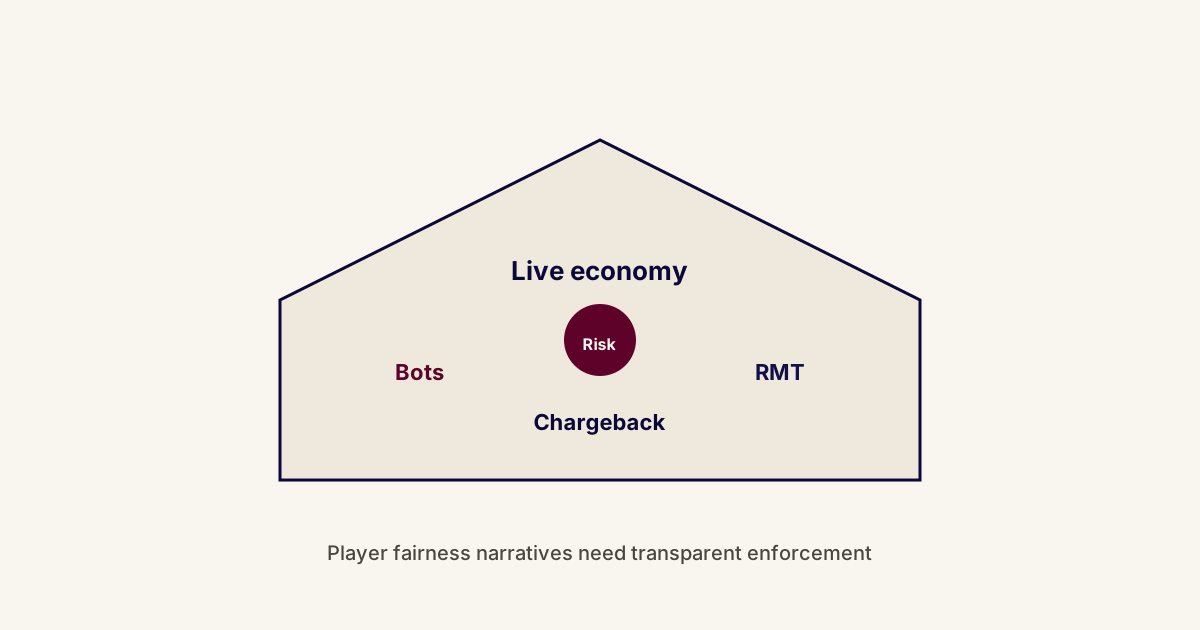
The report organizes risk into automation abuse, real-money trading rings, friendly fraud chargebacks, and insider threats from compromised admin tools. Each category needs distinct telemetry, policy, and customer communications.
Machine learning assists risk scoring but demands fairness review when actions affect paying players. Appeals workflows and human review for high-value accounts reduce viral backlash.
Virtual currency and loot box mechanics intersect gambling regulations in several jurisdictions. Legal should classify mechanics before engineering ships probability tables.
Payment orchestration and regional acquirers affect decline rates and fraud models. Instrument fragmentation complicates device fingerprinting; document assumptions when vendors change.
Player support tooling should surface risk context safely. Agents need enough detail to explain enforcement without leaking detection methods that fraudsters will reverse engineer.
Metrics include false positive rate on bans, average dispute resolution time, and revenue leakage estimates by abuse category. Executives need narratives, not only ban counts.
We include tabletop scenarios for economy exploits during major launches and coordinated account takeover waves tied to credential stuffing.
We can present findings in a working session, map recommendations to your portfolio and risk register, and help you prioritize next steps with clear owners and timelines.