Insights · Report · Industry · Apr 25, 2026
PMS and CRS integrations, tokenized payments, franchise consistency, and marketing personalization without turning every hotel into a full cardholder data environment.
Hotels collect rich guest profiles across property management systems, central reservations, loyalty programs, spas, and restaurants. Payment card data intersects that graph repeatedly, expanding PCI scope when tokenization and segmentation fail.
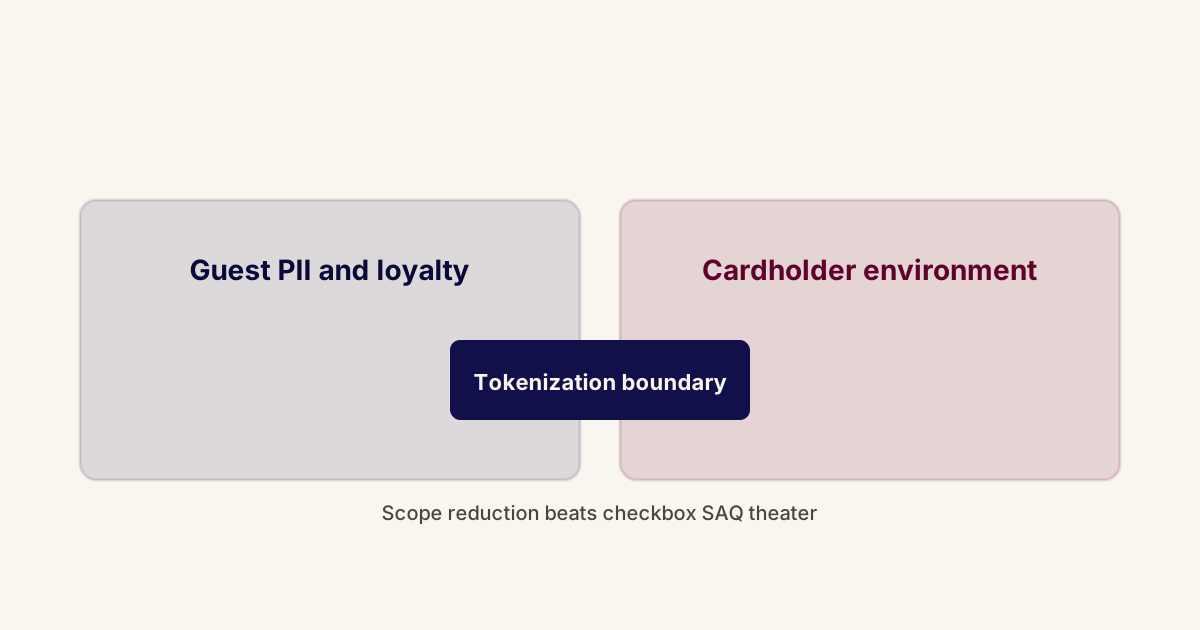
This brief champions a hard boundary between guest profile and loyalty data and the cardholder data environment. Tokenization services, point-to-point encryption, and hosted fields reduce local storage and shrink assessment surface.
Franchise and managed property models complicate accountability. Contracts should assign PCI validation duties, scan cadence, and incident notification paths. Ambiguity becomes fines and brand damage during a breach.
Marketing personalization pulls reservation history into email and mobile campaigns. Consent, frequency caps, and unsubscribe hygiene reduce complaints and align with privacy expectations globally.
Third-party booking channels create duplicate profiles. Master data strategies and merge rules reduce awkward service failures and duplicate marketing touches.
Operational technology such as electronic locks and minibars increasingly network back to guest profiles. Segment those devices and monitor for default credentials and vendor backdoors.
Workforce access to guest data should follow role-based patterns with periodic reviews. Seasonal hiring spikes are not an excuse for shared passwords at the front desk.
Appendices include SAQ path decision trees simplified for non-technical owners and sample RFP language for unified commerce vendors.
We can present findings in a working session, map recommendations to your portfolio and risk register, and help you prioritize next steps with clear owners and timelines.