Insights · Report · Data & AI · Apr 8, 2026
Validation depth, independent review, drift monitoring, and retirement evidence that align ML operations with supervisory expectations without freezing iteration.
Model risk management for traditional scorecards matured over decades. Machine learning introduces faster refresh cycles, richer feature stores, and vendor-hosted components that do not fit a single annual validation calendar. Supervisors still expect the same core idea: identify risk, measure it, control it, and prove continuity.
This report translates MRM principles into a lifecycle that DevOps teams can execute. Development begins with a decision-use statement, a data dictionary tied to legal purpose, and baseline performance metrics that include fairness tests where regulations apply.
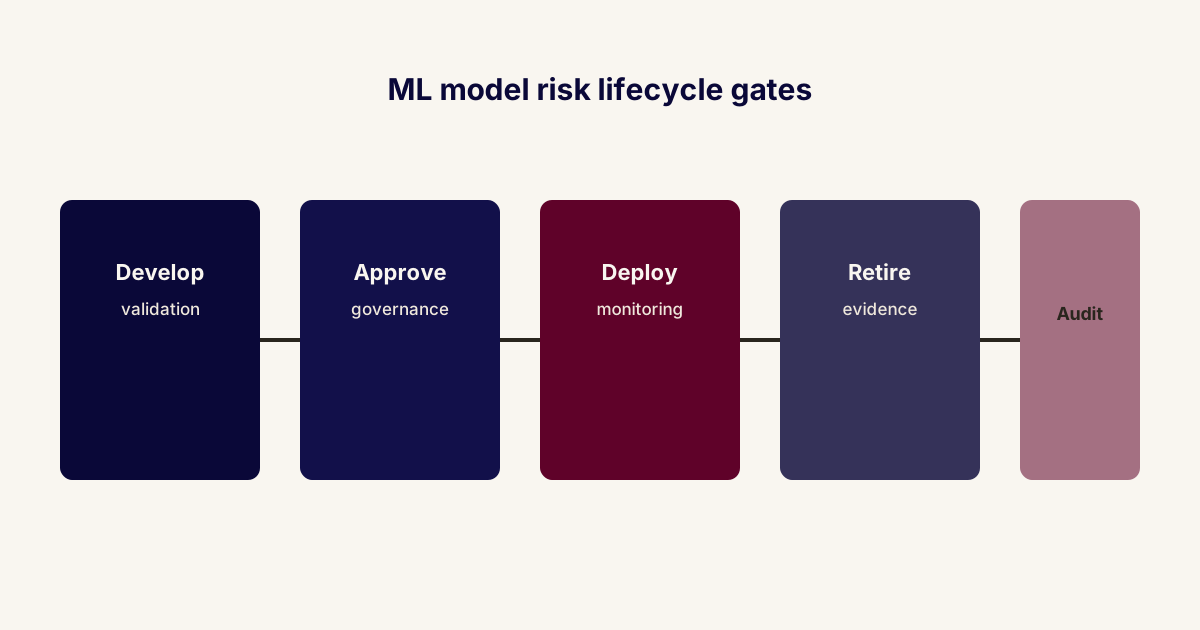
Independent review does not require hostility between teams. Effective programs embed reviewers early, share notebooks and evaluation harnesses, and timebox findings so models can ship with documented limitations rather than endless rework.
Deployment governance should connect to change management. Version pinning, canary releases, and automated rollback are not only reliability tools; they are evidence that production changes were controlled and traceable.
Monitoring chapters cover statistical drift, data quality drift, and operational drift such as upstream API latency that changes feature distributions. Alerts should route to model owners with runbooks, not to generic operations queues.
Third-party and open source models need explicit accountability. Contracts should clarify retraining obligations, incident notification, and the right to export artifacts for offline analysis when vendors change pricing or sunset SKUs.
Retirement is a formal stage. When a model leaves production, archive artifacts, retain monitoring history for the supervisory window your jurisdiction requires, and document customer impact if decisions were reverted to manual processes.
Appendices include sample committee agendas, a RACI tuned for agile squads, and interview questions we use when assessing vendor model platforms. Use them to accelerate alignment between model developers, risk, and internal audit.
We can present findings in a working session, map recommendations to your portfolio and risk register, and help you prioritize next steps with clear owners and timelines.