Insights · Report · Risk · Apr 2, 2026
A board-ready narrative on important business services, substitutability, scenario testing, and how supervisors expect evidence to look in audits and exams.
Operational resilience is no longer a parallel program to cybersecurity. Committees are asking for a single map from customer-facing outcomes to the technology and third parties that keep those outcomes alive. When the map is fuzzy, regulators hear optimism instead of proof.
This brief defines important business services in language both risk committees and product leaders can endorse. It separates customer harm scenarios from internal inconvenience, and it ties each scenario to tolerable impact thresholds your firm is willing to defend in public.
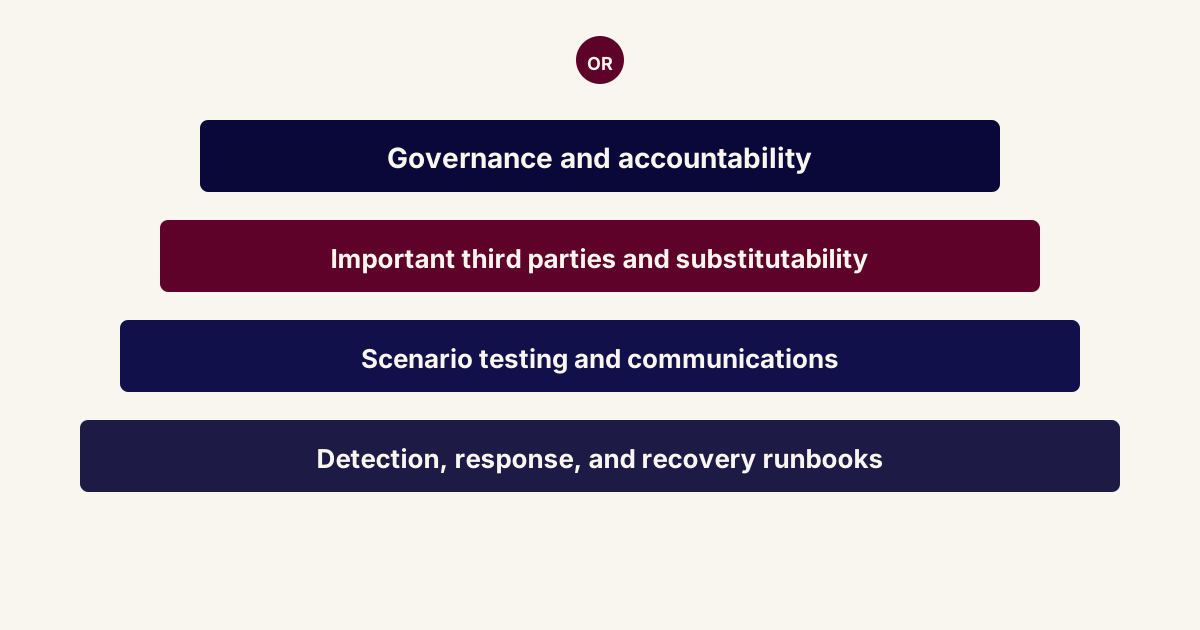
ICT third-party concentration appears in more supervisory questionnaires than ever before. The practical question is substitutability: how fast you can move a critical function to an alternate supplier, an alternate region, or a controlled manual process without breaching prudential expectations.
We document how leading firms maintain a living register of exit triggers, contract clauses that actually help in a crisis, and rehearsal evidence that shows decision makers practiced communications under time pressure. Slide decks without timestamps do not count as rehearsal evidence.
Scenario design is where many programs stall. Good scenarios are specific enough to produce measurable actions: who gets paged, which dashboards are authoritative, which regulators receive which facts, and how customer messaging stays consistent across channels.
The brief includes a twelve-month roadmap that sequences data quality work, dependency mapping, tabletop cadence, and supplier attestations. The roadmap is intentionally boring so it can survive leadership changes and budget cycles.
For technology organizations, the chapter on telemetry explains how to correlate service health signals with business service maps. The goal is to shorten the bridge between an engineer noticing degradation and an executive understanding customer impact.
Procurement and legal teams receive a checklist for material contract amendments: access to logs during incidents, participation in joint tests, and clarity on subprocessors that touch regulated data. These clauses reduce argument time when minutes matter.
Finally, we summarize common examination themes: evidence of board oversight, proof that lessons from prior incidents changed controls, and demonstration that third-party risk is not siloed away from enterprise risk management. Use the appendix as a self-test before external review.
We can present findings in a working session, map recommendations to your portfolio and risk register, and help you prioritize next steps with clear owners and timelines.