Insights · Report · Industry · Apr 10, 2026
Trust frameworks, accessibility, offline equity, and fraud resistance for agencies scaling digital wallets and unified service portals.
Citizens expect the same convenience they see from banks and retailers, yet public agencies must serve everyone, including people without smartphones or stable addresses. Digital identity programs fail when they optimize only for the easiest users.
This outlook compares centralized, federated, and wallet-based models with emphasis on privacy by design and auditability. Political context varies; the report focuses on operational patterns that survive leadership transitions.
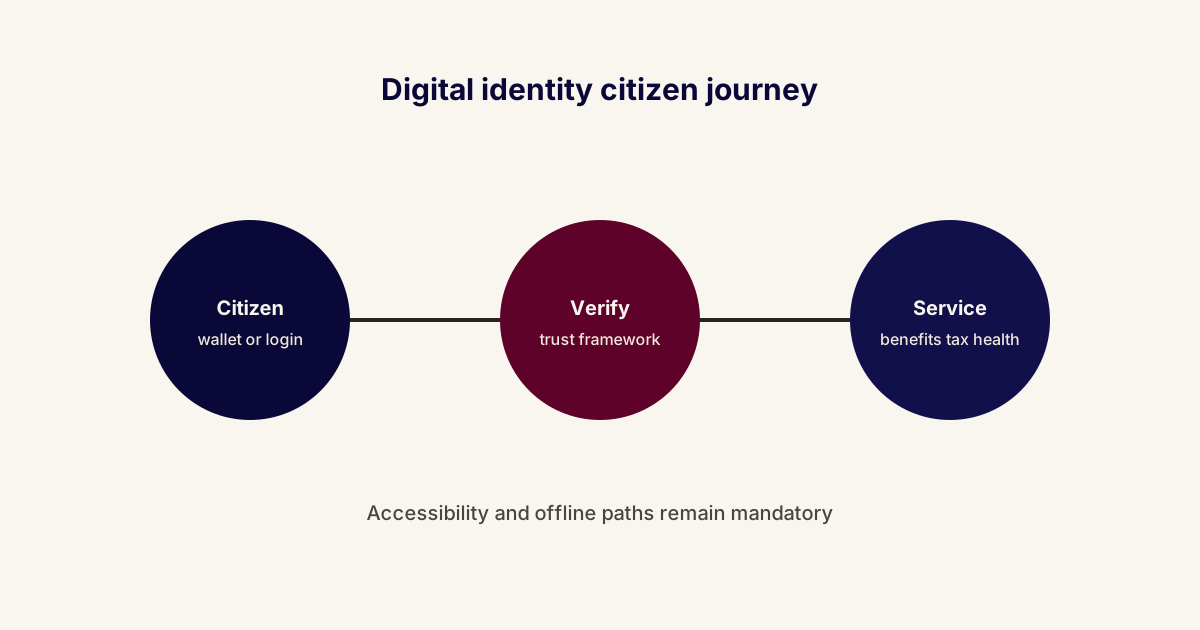
Fraud resistance blends document verification, device signals, and in-person fallback paths. Over-reliance on any single vendor creates concentration risk and narrows appeal to critics.
Accessibility and plain language are legal and moral requirements. Service teams should test journeys with screen readers, low bandwidth simulation, and simplified language variants.
Data minimization matters more in government than in many private contexts. Store attributes once, reference them with purpose codes, and expire what law allows. Retention schedules should be executable, not aspirational.
Interagency sharing needs authoritative identifiers and shared consent receipts. Without shared metadata standards, citizens re-verify endlessly and trust erodes.
Procurement guidance encourages modular identity providers, open interfaces, and exit clauses. Sovereignty concerns should not become permanent lock-in without scrutiny.
Metrics chapters contrast digital uptake, fraud loss, and service level attainment. Raw login counts hide exclusion; disaggregate by region, age, and channel.
We include communications templates for breach scenarios and mistaken identity resolution. Transparency after errors rebuilds trust faster than silence.
We can present findings in a working session, map recommendations to your portfolio and risk register, and help you prioritize next steps with clear owners and timelines.