Insights · Report · Security · Mar 22, 2026
Inventory methods, hybrid transition patterns, and governance checkpoints for teams modernizing algorithms without boiling the ocean.
Quantum readiness is easy to overhype and hard to operationalize. Most enterprises do not need a keynote slogan; they need an inventory of cryptographic usage that is complete enough to prioritize, and a migration plan that respects production constraints.
This report walks security architecture and enterprise risk through a phased approach. Phase one is discovery: certificates, VPNs, database encryption, message queues, backup archives, and vendor-managed services that hide algorithms behind APIs.
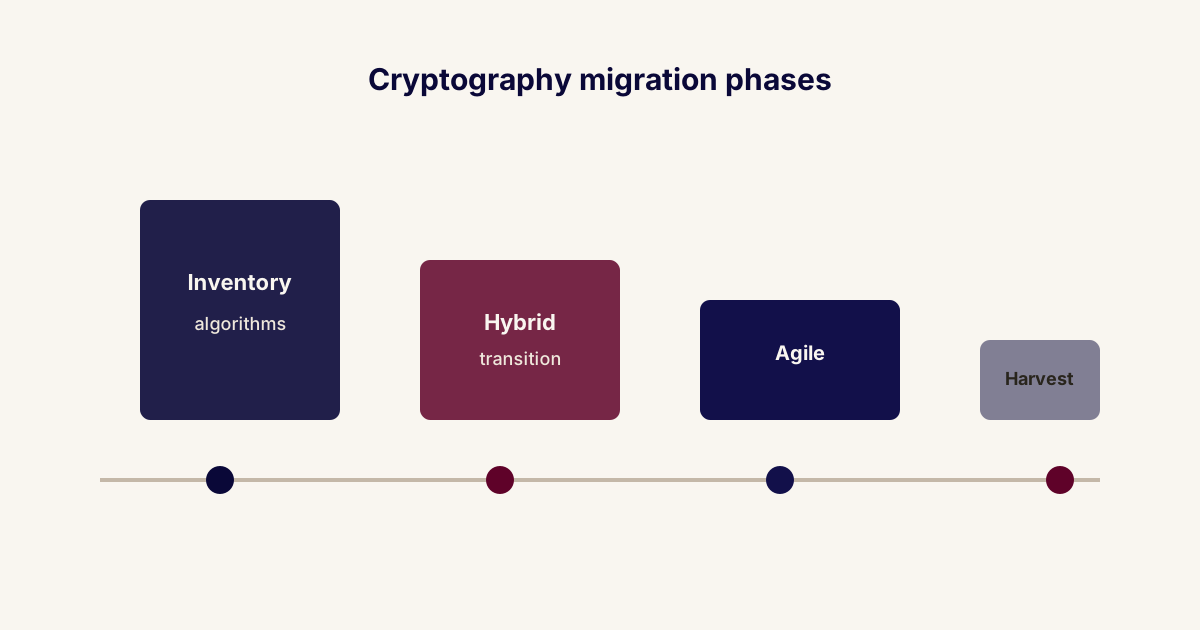
Phase two focuses on agility rather than instant perfection. Organizations adopt crypto agility patterns: centralized policy, automated renewal, testing harnesses for new algorithms, and configuration baselines that can roll forward without multi-week projects.
Hybrid schemes feature prominently because interoperability dominates real-world rollouts. We explain where hybrid approaches fit transport layers, where they do not belong, and how to document risk acceptance when legacy clients cannot upgrade immediately.
Data with long confidentiality horizons receives its own chapter. Backup tapes, legal hold stores, and cold archives are easy to forget until someone asks a question regulators care about. The report proposes retention tagging that travels with objects, not only with primary databases.
Vendor management is intertwined with technical work. Cloud KMS offerings, HSM contracts, and SaaS applications that perform client-side encryption all need explicit roadmaps. Questionnaires should ask for algorithm families, upgrade commitments, and customer-visible change windows.
We include steering committee agendas, RACI suggestions, and KPI examples such as percentage of TLS endpoints on approved cipher policies and mean time to rotate enterprise root trust stores. KPIs should be measurable by security operations, not only by architecture slides.
A final section addresses communications: how to speak to boards without fear-mongering, and how to align with privacy and legal teams on lawful access and key escrow topics where applicable. Calm, precise language protects the program when headlines get noisy.
We can present findings in a working session, map recommendations to your portfolio and risk register, and help you prioritize next steps with clear owners and timelines.