Insights · Report · Data & AI · Apr 12, 2026
How product, legal, and risk teams review AI-powered features before launch so public statements stay substantiated and supervision-ready.
Marketing teams face pressure to label every feature as intelligent. Regulators and plaintiffs counsel increasingly compare public claims to actual model behavior. Governance should treat customer-facing copy as part of the model boundary.
We propose a claims review board with product management, legal, marketing, and model risk representation. The board evaluates performance evidence, limitation language, and regional nuances before campaigns ship.
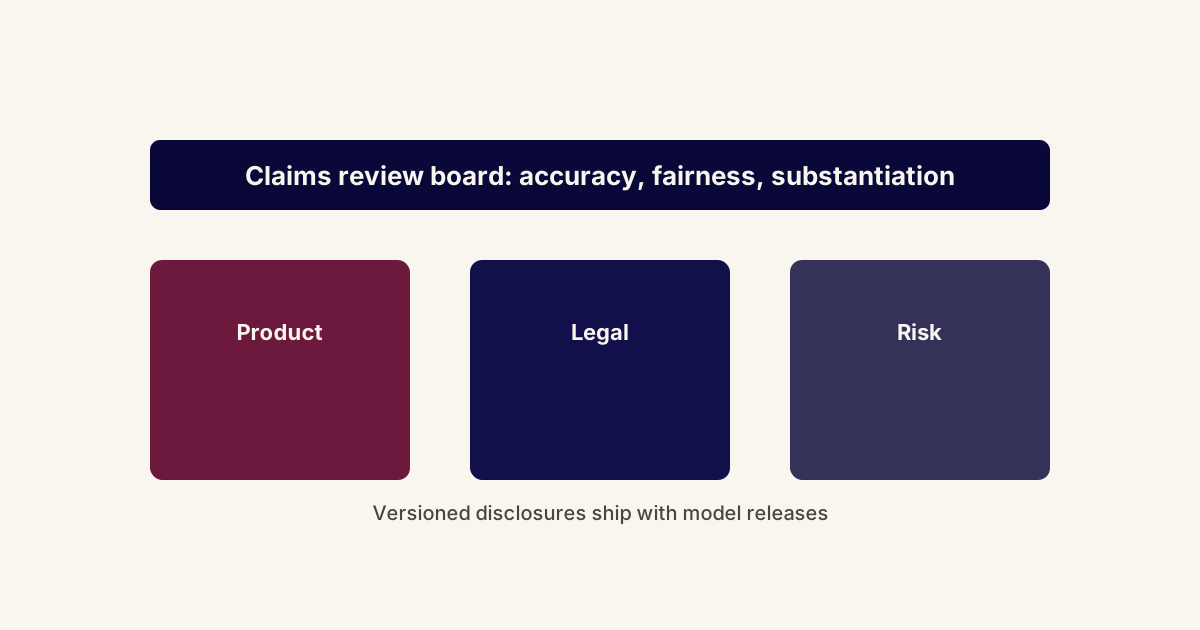
Substantiation files should mirror consumer protection practice: datasets used for benchmarks, comparison baselines, and confidence intervals where applicable. Vague superlatives without measurement invite scrutiny.
Fairness and accessibility intersect marketing when models affect eligibility or pricing. Disclosure alone is not a shield; remediation and monitoring plans belong in the same package.
Third-party models complicate ownership. Contracts should clarify who is responsible when vendor marketing overstates capabilities your product inherits. Escalation paths should be contractual, not only relational.
Digital channels need synchronized messaging. Help centers, chatbots, and sales decks should not contradict approved claims. Content management integrations reduce drift.
Incident communications receive a playbook: how to revise claims after a model rollback, how to explain degraded modes, and how to coordinate with PR without bypassing legal review.
Appendices list sample redlines for common phrases and a lightweight scorecard for risk tiering. High tier launches warrant deeper statistical review; low tier features still need basic accuracy checks.
We can present findings in a working session, map recommendations to your portfolio and risk register, and help you prioritize next steps with clear owners and timelines.