Insights · Report · Security · May 9, 2026
Telemetry and command segmentation, supply chain assurance for radios and FPGAs, and coordination with commercial space traffic when cyber events resemble interference.
Space systems are distributed cyber-physical systems. Attackers target ground networks, operator workstations, and software supply chains because satellites are hard to patch in orbit. Resilience begins on Earth.
The report frames segmentation between mission control, ground stations, corporate IT, and customer data products. Flat networks invite ransomware that masquerades as a bad software update.
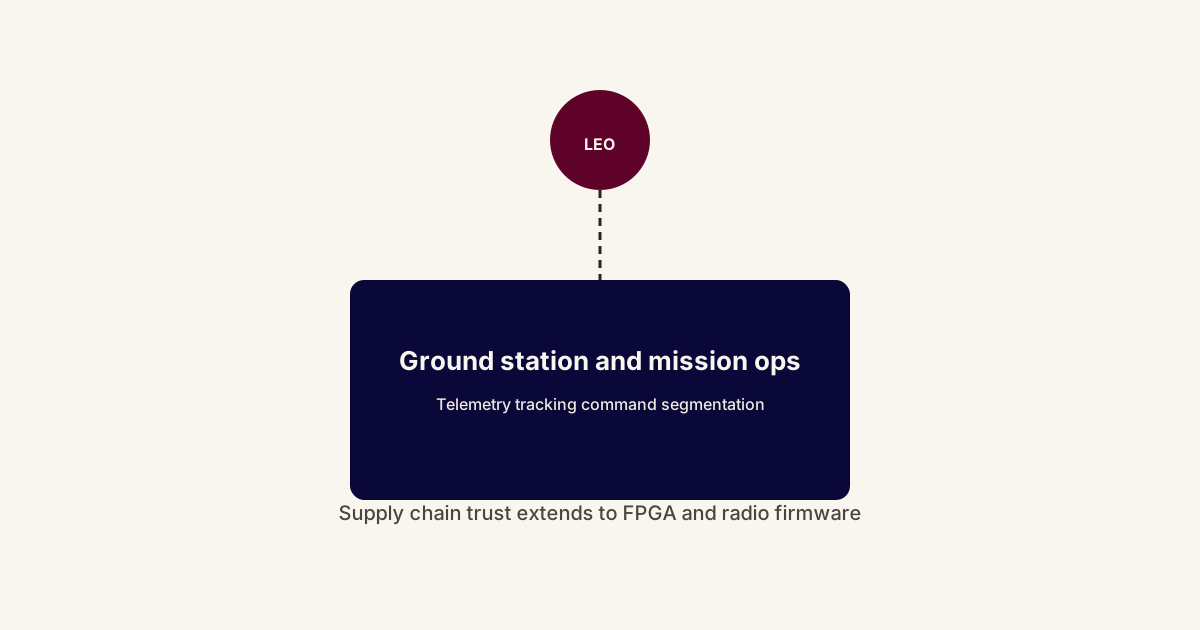
Cryptographic key management for command authentication needs lifecycle planning including revocation when staff depart or vendors rotate firmware.
Hardware supply chain assurance for radios and reconfigurable logic should mirror defense industrial practices scaled for commercial budgets. Tamper evidence and provenance documentation reduce panic during anomalies.
Situational awareness teams should integrate cyber indicators with RF monitoring where lawful. Some anomalies look like interference but originate from compromised ground software.
Incident disclosure intersects national security and commercial customer contracts. Pre-agreed communication trees reduce contradictory public statements.
Cloud ground station as a service offerings shift trust boundaries. Threat models must include multi-tenant neighbor risk and provider admin paths.
Appendices list tabletop scenarios for malicious command injection attempts and for loss of telemetry during a simultaneous IT outage.
We can present findings in a working session, map recommendations to your portfolio and risk register, and help you prioritize next steps with clear owners and timelines.