Insights · Report · Strategy · Apr 5, 2026
Embodied carbon in laptops and servers, vendor takeback programs, and disclosure-friendly metrics that connect asset management to ESG reporting.
Sustainability conversations often stop at datacenter PUE while ignoring embodied carbon in endpoints. For distributed enterprises, client devices and edge appliances can dominate hardware impact. Procurement and IT asset management need shared metrics.
This report proposes asset-class carbon budgets aligned to refresh cycles. Instead of buying the cheapest spec, teams compare total cost of ownership with manufacturer-provided embodied carbon estimates and verified takeback pathways.
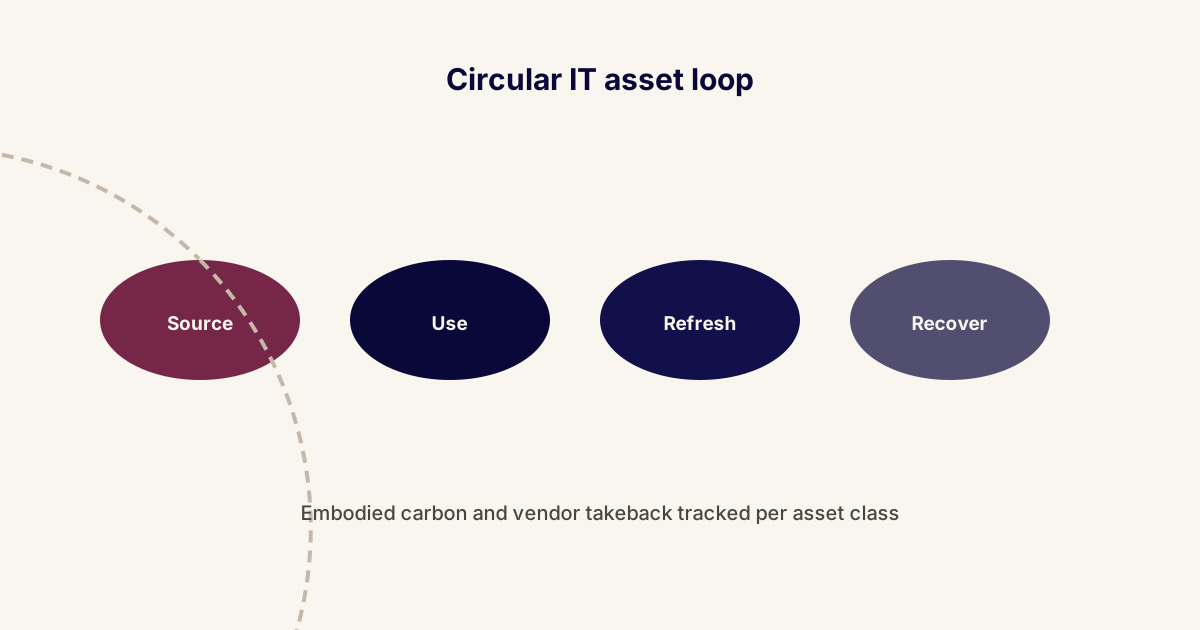
Refurbishment and redeployment deserve explicit policies. Security wiping, firmware trust, and spare parts availability determine whether a secondary lifecycle is realistic. Skipping those details creates shadow IT markets in unofficial resale.
Cloud migration changes the shape of responsibility but not the need for discipline. Hosted hardware still has a supplier story. Ask hyperscalers and colocation partners for region-level efficiency data and renewable energy claims you can cite in disclosures.
Finance should recognize that longer refresh cycles can increase support costs and security risk. The report includes simple break-even worksheets so sustainability gains do not hide operational debt.
ESG reporting teams receive mapping guidance from asset tags to disclosure lines. Inconsistent serial number hygiene breaks traceability fast. Treat identifiers as seriously as financial account numbers.
We list certification schemes and common greenwashing signals so sourcing leaders can challenge vague marketing. Third-party verification beats logo stickers on a brochure.
Closing recommendations cover executive dashboards: percentage of assets on certified takeback, estimated tons diverted from landfill, and energy-adjusted utilization of shared pools such as virtual desktop farms.
We can present findings in a working session, map recommendations to your portfolio and risk register, and help you prioritize next steps with clear owners and timelines.