Insights · Report · Research · Apr 9, 2026
Data lineage for cash and collateral, scenario engines, board reporting cadence, and controls that satisfy prudential reviewers without paralyzing daily treasury ops.
Liquidity risk reporting broke in many firms when product complexity outpaced spreadsheet governance. Modern programs unify cash positions, encumbrances, and contingent liquidity lines into governed data pipelines with the same rigor as regulatory capital reporting.
The report begins with source system mapping: cores, treasury workstations, securities services, and manual adjustments. Each feed receives an owner, a reconciliation rule, and a materiality threshold for exceptions.
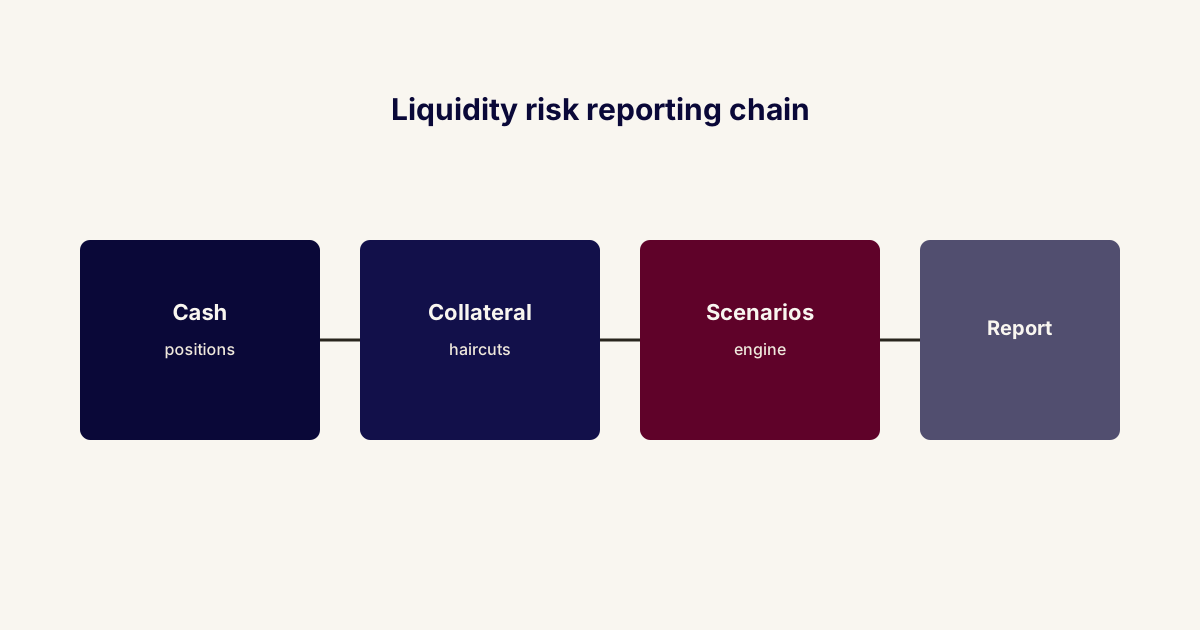
Stress engines need transparent assumptions. Shock parameters, haircuts, and behavioral models should be versioned with approvals. Black boxes frustrate internal audit and external examiners alike.
Intraday liquidity monitoring intersects payments modernization. Real-time gross settlement participation and faster payment schemes change peak liquidity needs. Technology must refresh intraday views without batch-only blind spots.
Board packs should explain limitations plainly. If certain currencies or subsidiaries lag consolidation, say so. Surprises in committee rooms damage credibility more than imperfect coverage disclosed early.
Control testing mirrors other financial reporting: access reviews, change management for models, and segregation between developers and operators. Cloud migrations do not remove those expectations.
We document integration patterns with ALM and FTP systems so treasury, finance, and risk speak from reconciled numbers. Divergent spreadsheets create political fights, not insights.
Appendices provide sample KPI definitions and a checklist for vendor selection when replacing legacy engines. Speed without auditability is a false economy.
We can present findings in a working session, map recommendations to your portfolio and risk register, and help you prioritize next steps with clear owners and timelines.