Insights · Report · Industry · May 2, 2026
Meter mesh networks, head end hardening, usage inference risks, and public transparency when advanced metering supports conservation and leak detection.
Advanced metering infrastructure helps detect leaks, improve billing accuracy, and support drought programs. Granular usage also enables inference about occupancy and lifestyle, which triggers privacy expectations even when names are absent from public datasets.
This brief separates engineering telemetry paths from customer-facing portals, with encryption, key rotation, and vendor remote access controls spelled out for both.
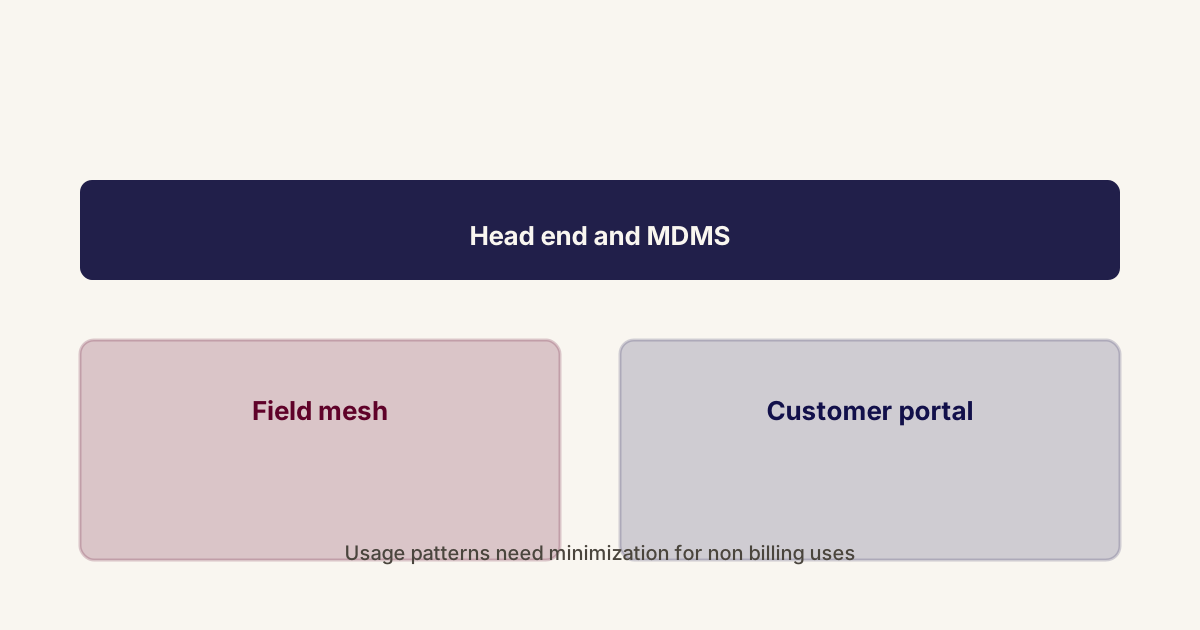
Mesh radio technologies differ by vendor; procurement should require interoperable standards where feasible and documented sunset plans for proprietary stacks.
Cyber physical risks include coordinated valve or pump interfaces where AMI ties to SCADA. Threat models should include ransomware that encrypts head end databases while field devices keep broadcasting.
Customer communications should explain optional programs that use high resolution data. Opt-in language belongs in the same system that enforces sampling intervals.
Municipal procurement overlaps public records law. Decide proactively what aggregates are publishable versus what requires redaction.
Workforce cyber training should include field technicians with laptops bridging IT and OT. Their credentials are high value targets.
Appendices include sample security clauses for AMI RFPs and metrics for outage mean time to restore by region.
We can present findings in a working session, map recommendations to your portfolio and risk register, and help you prioritize next steps with clear owners and timelines.