Insights · Article · Security · May 2026
Query complexity, persisted operations, authentication context, and protecting the graph from both naive clients and adversarial batching attacks.
GraphQL gives product teams the power to fetch exactly the data they need in a single round trip, accelerating frontend development and reducing over-fetching across mobile and web clients. That same flexibility, however, introduces a class of security risks absent from traditional REST APIs. A single deeply nested query can trigger cascading resolver calls that overwhelm databases, exhaust connection pools, and expose sensitive relationships the schema designer never intended to surface publicly.
Unlike REST endpoints where each route maps to a predictable backend cost, GraphQL queries are composed dynamically by the client. Every incoming request carries an unknown computational footprint until the server parses and analyzes it. Without proactive safeguards at the gateway layer, a single malicious or poorly written query can consume more resources than thousands of well-behaved requests combined. Security teams must treat query parsing as an active threat boundary rather than a passive routing step.
Depth limiting is the first and most accessible defense. Setting a maximum nesting level prevents recursive traversals that exploit circular type references in the schema. A query requesting users, then their orders, then order items, then reviews, then review authors can spiral into exponential resolver invocations. Enforcing a strict depth ceiling of four to six levels blocks these runaway traversals while accommodating the vast majority of legitimate client queries.
Breadth limiting complements depth controls by capping the total number of fields or selection sets allowed in a single query. Even a shallow query requesting every field on a large type can generate expensive database projections and join operations. Teams should enforce maximum breadth thresholds and return clear, descriptive error messages when limits are exceeded. Opaque 500 responses teach developers nothing and encourage aggressive retry behavior that compounds the original problem.
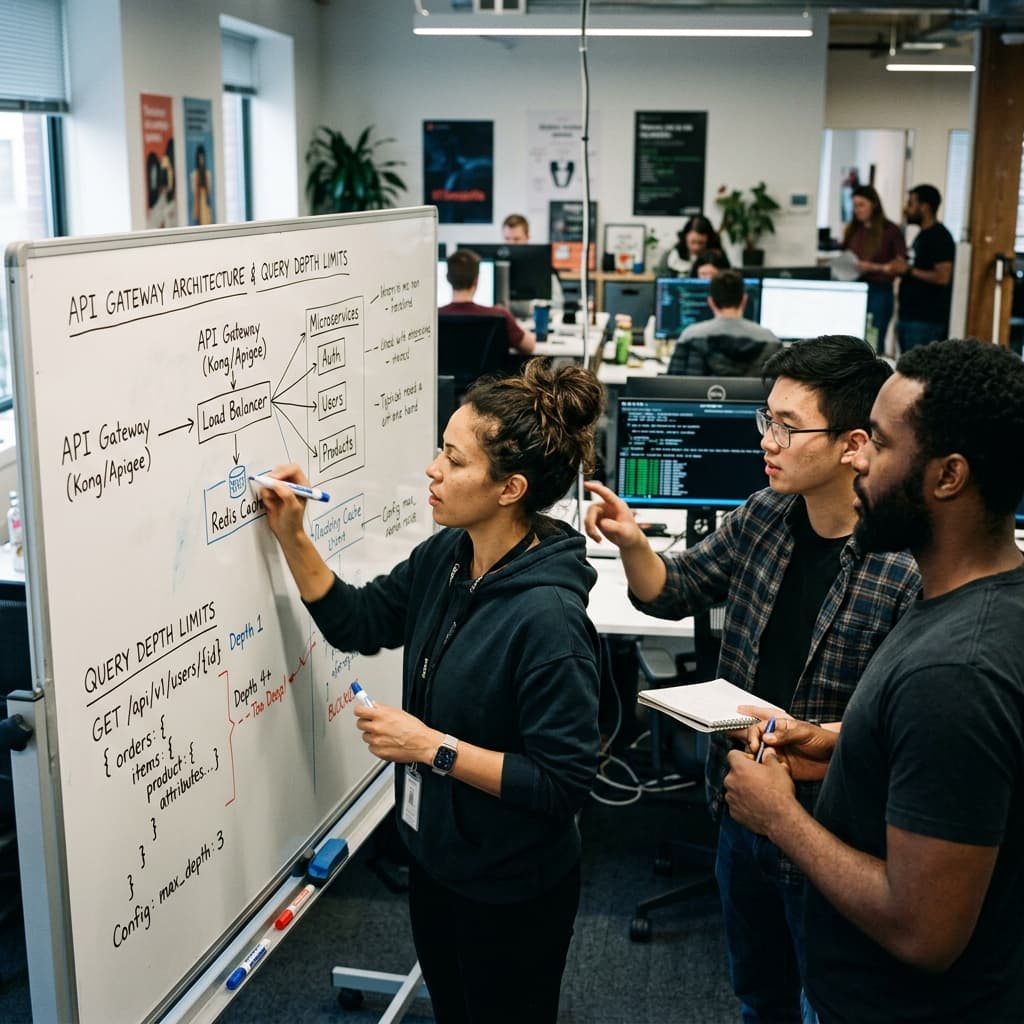
Persisted queries represent one of the most effective strategies for reducing the attack surface of public-facing GraphQL endpoints. By requiring clients to register their queries in advance and submit only a hash at runtime, the server rejects any unknown query before parsing begins. This technique is especially valuable for mobile and single-page applications where the set of queries is finite and predictable. Persisted operations eliminate entire categories of injection and exfiltration attacks.
Query cost analysis moves beyond blunt depth and breadth checks by assigning a weighted score to each field and connection in the schema. A field that triggers a single database lookup costs far less than a paginated connection that fans out across multiple tables. Effective cost analysis requires calibration against real production traces, because static estimates based solely on schema structure routinely underestimate the true resolver overhead by an order of magnitude.
Production tracing data should feed back into cost model tuning on a regular cadence. As schemas evolve and new resolvers are added, the computational profile of the graph changes. A field that was inexpensive last quarter may now trigger a downstream microservice call with its own latency characteristics. Teams that rely on initial cost estimates without periodic recalibration accumulate silent drift between their security model and the actual resource consumption of their graph.
Authentication and authorization must be deeply integrated into the GraphQL execution context. Every resolver invocation should have access to the authenticated user, their roles, and their permission scopes without requiring redundant token validation at each level. Binding authentication state to the request context at the gateway layer ensures consistent enforcement and avoids the performance penalty of repeated credential verification across dozens of resolvers within a single query execution.
Field-level authorization adds granular access control that coarse endpoint-level policies cannot provide. Sensitive fields such as salary data, internal notes, or administrative flags should enforce permission checks at the resolver level, returning null or a permission error for unauthorized callers. Without careful performance discipline, however, field-level checks can introduce significant latency when a single query touches hundreds of fields. Batching permission lookups and caching role decisions per request are essential optimizations.
Rate limiting for GraphQL requires a fundamentally different approach than the per-endpoint counters used in REST architectures. A single GraphQL endpoint serves all query types, so limiting by URL path alone provides no meaningful protection. Instead, rate limits should factor in authenticated user identity, client application tier, computed query cost, and source IP address. Combining these dimensions allows the gateway to differentiate between a lightweight lookup and an expensive analytical query.
Distributed client applications connecting from mobile networks, edge locations, and partner integrations each present unique traffic patterns. Fair-share allocation policies ensure that a single heavy consumer cannot monopolize the available request budget at the expense of other tenants. Implementing sliding window or token bucket algorithms at the gateway gives teams the flexibility to absorb legitimate traffic bursts during application startup while still enforcing sustained throughput ceilings over longer intervals.
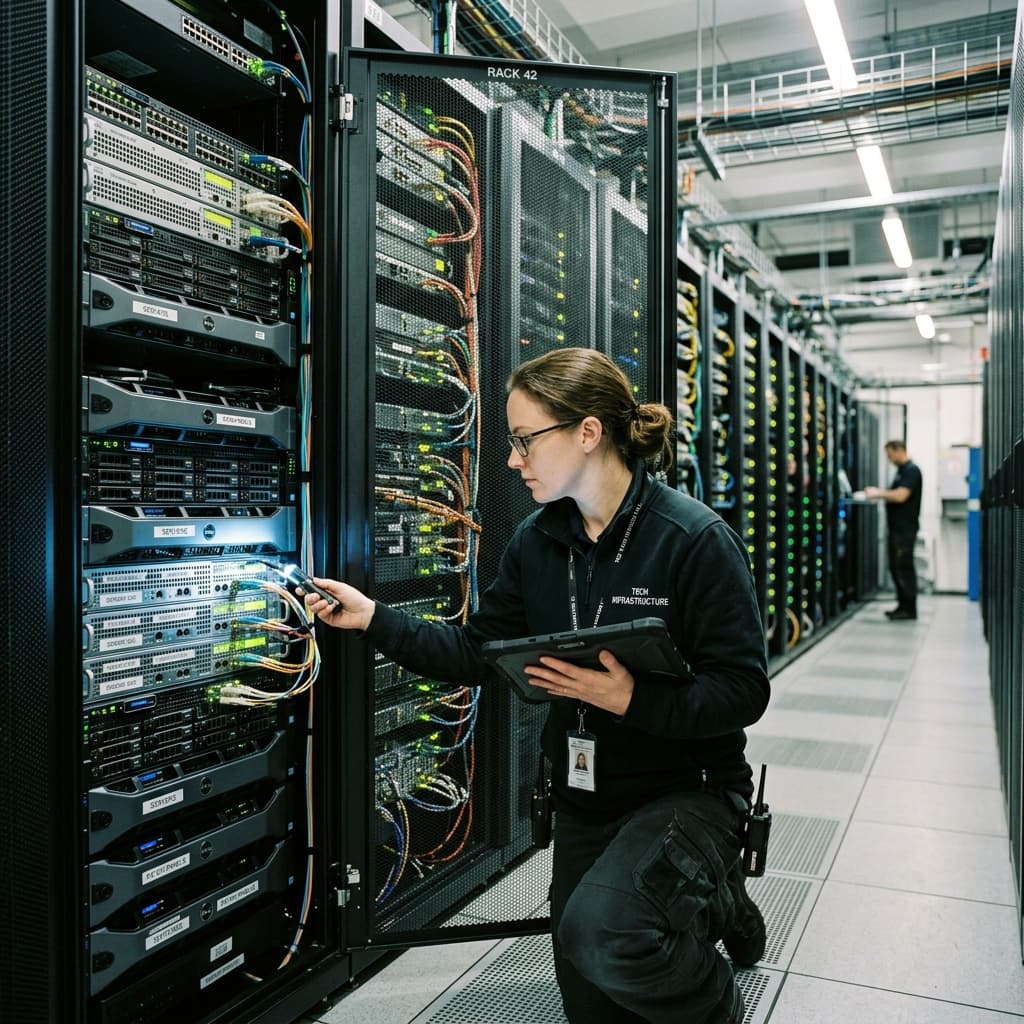
Introspection is a powerful developer tool during development but a reconnaissance gift to attackers in production. Public-facing schemas should disable introspection entirely or restrict it to authenticated internal users. When attackers can freely map every type, field, and relationship in the graph, they gain a detailed blueprint for crafting targeted exfiltration queries. Internal schemas serving trusted backend services may safely expose introspection, but the decision must be explicit and reviewed as part of the security posture.
Query batching and field aliasing introduce subtle bypass vectors that naive rate limiters and cost analyzers frequently miss. An attacker can submit a single HTTP request containing dozens of aliased mutations, each performing a password reset or account lookup, effectively multiplying the impact of one allowed request. Similarly, batched queries packed into a single payload can circumvent per-request cost limits. Security teams must evaluate cost and rate limits at the operation level rather than the HTTP request level.
Automated security testing should validate GraphQL defenses as part of every continuous integration pipeline. Dedicated test suites should submit queries that deliberately exceed depth, breadth, and cost thresholds, confirming that the gateway rejects them with the correct error codes. Adversarial test cases covering aliased mutations, batched operations, and introspection probes ensure that protective controls remain effective as the schema evolves and new resolvers are deployed across the organization.
Observability for GraphQL security extends beyond simple request counts and latency percentiles. Teams should instrument rejected query reasons as distinct metrics, separating depth violations from cost overruns and authentication failures. Alert thresholds tuned to each category allow on-call engineers to distinguish between a misconfigured client integration and a deliberate probing campaign. Dashboards that aggregate all rejections into a single counter obscure the operational signals that matter most during an active incident.
Schema design itself is a security activity that deserves deliberate architectural attention. Schemas that create god nodes connecting users to orders to payments to internal audit logs offer attackers a direct traversal path through the entire data model. Thoughtful type boundaries, explicit connection types with mandatory pagination arguments, and intentional omission of sensitive internal relationships reduce the blast radius of any single compromised query. Graph modeling decisions made during design review prevent entire classes of vulnerabilities that no runtime limit can fully address.
Securing a GraphQL API is a layered discipline spanning gateway configuration, schema architecture, runtime analysis, and organizational process. Depth, breadth, and cost limits form the foundational controls. Persisted queries, field-level authorization, and intelligent rate limiting add precision. Continuous testing and observability close the feedback loop. Organizations that treat GraphQL security as a first-class engineering concern protect their data, their infrastructure, and the trust of every client that depends on the graph.
We facilitate small-group sessions for customers and prospects without requiring a slide deck, focused on your stack, constraints, and the decisions you need to make next.