

Assessment
Landscape of legacy dependencies, identity posture, and citizen journey pain points with a prioritized remediation backlog.
Industry
Secure citizen services, identity, procurement, and legacy modernization for agencies and public enterprises - with accessibility, transparency, and continuity documentation that stands up to oversight, appropriations, and audit.

We embed delivery leads who understand appropriations rhythm, ATO timelines, and continuity requirements - not just agile ceremonies. Programs anchor on shared control narratives, named authority partnerships, and rehearsal-heavy cutovers so citizen-facing services stay available through funding and leadership transitions.
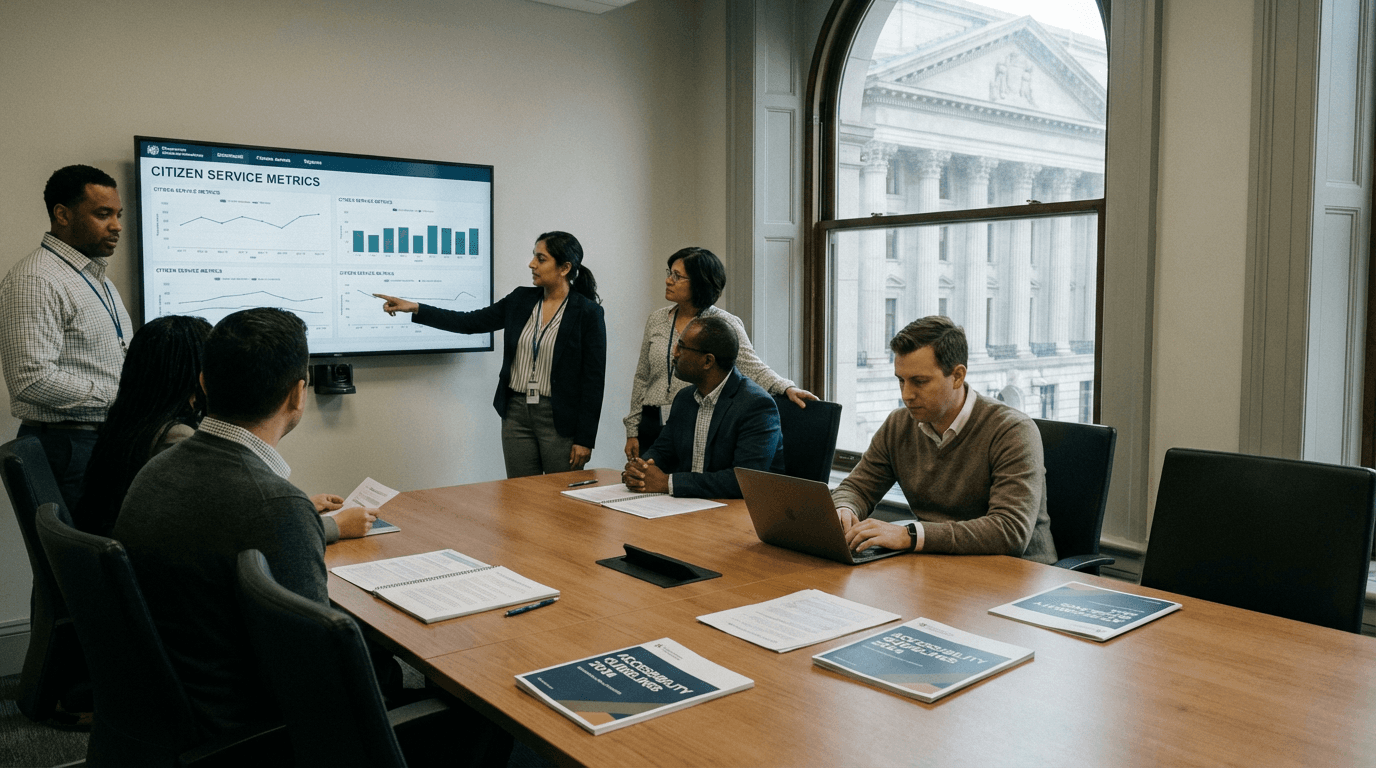
Structured phases with artifacts procurement, security, and program offices can reuse across recompetes and oversight cycles.
Landscape of legacy dependencies, identity posture, and citizen journey pain points with a prioritized remediation backlog.
Investment packaging, migration sequencing, and risk registers aligned to appropriations and ATO gates.
Control mapping, accessibility criteria, and architecture decisions recorded for continuity and audit.
Test packs, parallel operations, and rollback criteria signed before traffic moves for mission-critical services.
SME-led
Architecture & compliance reviews
24 to 48h
Typical crisis bridge response
Global
Delivery aligned to local regulation
Programs in government & public sector succeed when product, risk, and operations share a language. We embed bilingual leads who translate between engineering backlogs and supervisory expectations. Regulated programs often map security evidence to baselines such as ISO/IEC 27001 alongside sector-specific obligations.
Our accelerators include industry data models, integration blueprints, and test packs, always customized to your vendors and geography.
From first workshop to production cutover, we align success metrics with the regulatory and commercial outcomes your board cares about, not only technical milestones on a Gantt chart.
When regulators or internal audit ask for evidence, we help you point to configuration, tickets, and test results instead of narrative-only decks, so remediation stays proportional and traceable.
Public sector technology modernization must satisfy accessibility standards, public procurement rules, and operational continuity expectations while modernizing sprawling legacy estates. Neojn delivers citizen service portals, digital identity credentialing programs, and shared services architectures with documentation that satisfies oversight committees throughout delivery. That alignment between technical work and governance expectations is what allows programs to sustain funding across political transitions and oversight rotations that inevitably occur during multi-year modernization efforts.
E-government platform migration, sovereign cloud deployment, and grants management modernization each carry jurisdiction-specific considerations. Neojn adapts reference patterns to your legislative framework, oversight model, and procurement vehicle rather than applying generic templates. That adaptation matters because public sector delivery varies significantly across regions and levels of government, and programs that ignore local context tend to face resistance when familiar procedures or published guidance appear to be sidelined by vendor assumptions that do not match reality.
Change management in public sector modernization engages both civil servants whose work changes and citizens whose services depend on new platforms. Neojn plans communication, training, and support for both groups because skipping either tends to produce disappointment at launch. Frontline workers need confidence in new tools before citizens rely on them, and citizens need clear guidance when interacting with updated services. That dual engagement is what produces modernization that actually improves service delivery rather than simply replacing underlying technology.
Data residency, lawful access, and vendor exit strategies are foundational architectural concerns for public sector cloud adoption. Neojn designs these elements into landing zones from the start rather than as follow-on projects. Exit plans include tested procedures for moving workloads between providers or back on-premises if commercial or policy circumstances require. That preparedness protects public institutions from long-term dependency on commercial terms that might shift in ways inconsistent with governmental sovereignty and fiduciary duties.
Digital identity for citizens requires balance between security, privacy, and accessibility. Neojn implements identity systems that respect enrollment and verification requirements while handling assisted digital support and non-digital alternatives. Representatives and carers often need delegated access, and offline channels remain essential for citizens who cannot or prefer not to transact online. That comprehensive design ensures digital services do not inadvertently exclude citizens whose circumstances differ from the typical internet user profile.
Benefits administration, grants distribution, and emergency response platforms share the requirement for operational reliability with dignified user experience. Neojn implements these systems with clear service level commitments, transparent status reporting, and accessible design so citizens accessing public support receive it efficiently. Administrative workflows, case management, and appeals processes integrate with the frontend so staff and citizens operate in coordinated rather than parallel systems across the life of each case or application.
Agency CIOs, program directors, and procurement teams.
Design systems, automated checks, and manual audits target your mandated standard (e.g., WCAG-aligned). Remediation is tracked per release.
We adapt statements of work, reporting, and compliance artifacts to your templates and oversight cadence.
Classification drives controls, logging, and access reviews. Incident communications align to public sector playbooks.
Sovereign cloud localization playbooks, public digital identity reports, and accessibility articles map architecture choices to policy goals.
Discovery through steady operations with citizen impact in view.
Services, eligibility rules, and channel preferences are mapped with equity and accessibility notes.
Feedback loops include civil servants and citizens before mandatory cutovers.
Security monitoring, DR drills, and support rosters meet continuity requirements.
Analytics and service design iterations respect procurement change paths.
Modernization spans web, cloud, data, security, and governed departmental platforms.
Departmental software, EA registers, GRC, and records with procurement-ready evidence.
Digital GovernanceAccessible citizen and partner portals.
Web app developmentSovereign and hybrid patterns for sensitive workloads.
Cloud & DevOpsOpen data and analytics with governance suitable for agencies.
Data & AIOperating model and change management for large-scale public programs.
Management consultingWir moderieren eine gemeinsame Backlog-Session mit Business-Sponsoren und Control-Partnern, skizzieren Abhängigkeiten, Compliance-Gates und das kleinste lieferbare Stück, das Wert beweist – mit Ownern und Terminen für Ihr Steering.