

Assessment
Architecture snapshot of MES, PLCs, historians, and network segmentation with prioritized integration backlog.
Industry
OT and IT convergence, MES, quality, traceability, and supply visibility for discrete and process manufacturing, including shop-floor integration patterns that respect safety and downtime windows.
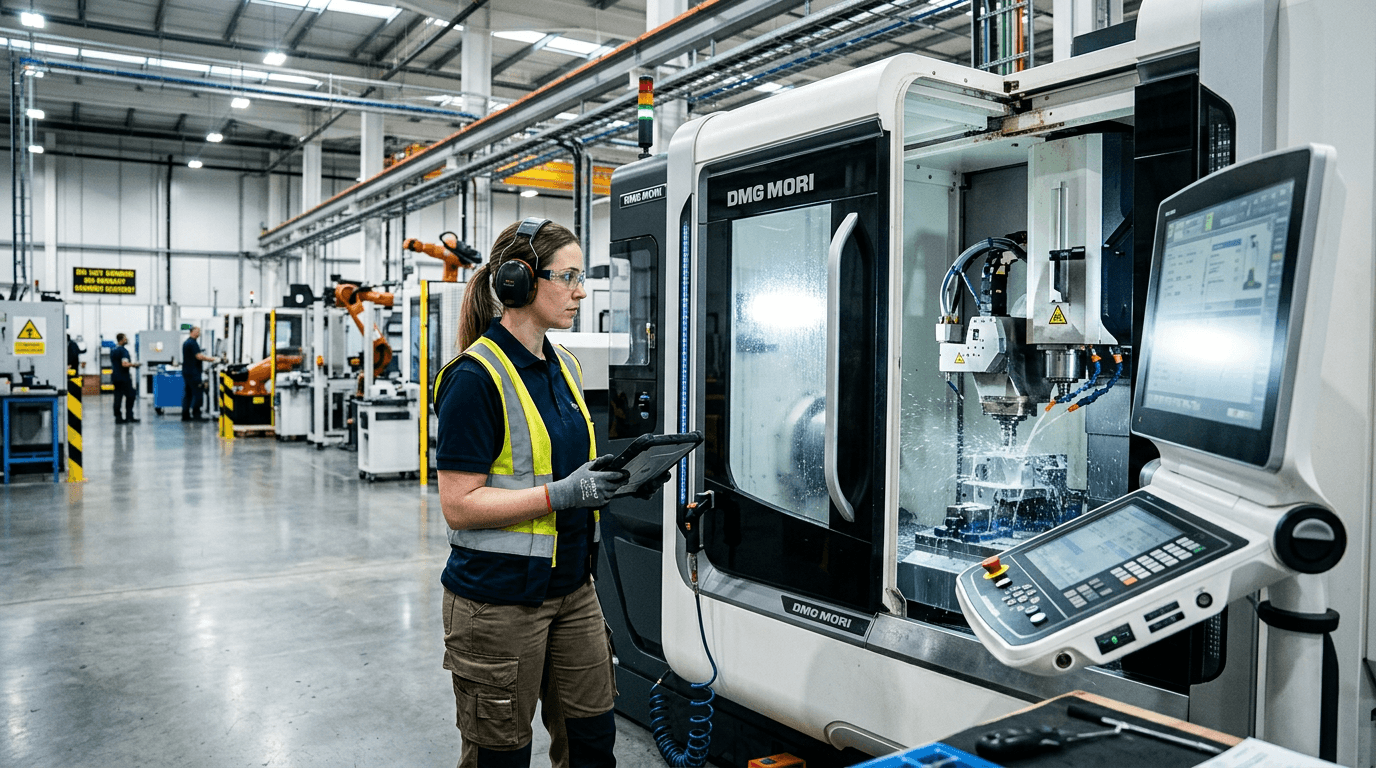
We embed engineers who respect lockout/tagout, change freezes, and safety culture - not just sprint velocity. Engagements sequence pilots on non-critical lines, prove telemetry fidelity, then scale integrations with rollback drills operations and EHS can sign.

Phases that align to plant calendars, capital gates, and quality audits - with evidence packs operations and compliance can reuse.
Architecture snapshot of MES, PLCs, historians, and network segmentation with prioritized integration backlog.
Roadmap for OT visibility, quality analytics, and cloud egress aligned to capex and downtime budgets.
Safety and cybersecurity joint design reviews with architecture decisions recorded for handover.
Pilot lines, parallel reconciliation, and production cutover with named rollback owners.
SME-led
Architecture & compliance reviews
24 to 48h
Typical crisis bridge response
Global
Delivery aligned to local regulation
Programs in manufacturing succeed when product, risk, and operations share a language. We embed bilingual leads who translate between engineering backlogs and supervisory expectations. Regulated programs often map security evidence to baselines such as ISO/IEC 27001 alongside sector-specific obligations.
Our accelerators include industry data models, integration blueprints, and test packs, always customized to your vendors and geography.
From first workshop to production cutover, we align success metrics with the regulatory and commercial outcomes your board cares about, not only technical milestones on a Gantt chart.
When regulators or internal audit ask for evidence, we help you point to configuration, tickets, and test results instead of narrative-only decks, so remediation stays proportional and traceable.
Manufacturing technology programs bridge shop-floor OT with enterprise IT under constraints that cloud-native teams rarely encounter. Downtime windows, safety interlocks, and patch discipline follow production reality rather than IT preference. Neojn implements MES, quality, and traceability solutions with integration patterns that respect these constraints. That respect is what prevents the familiar pattern where well-intentioned IT changes disrupt production and undermine operations confidence in modernization programs over successive attempts.
Industry 4.0 consulting, digital twin manufacturing, and supply chain visibility programs require practitioners who understand both information technology and operational technology practices. Neojn scopes these initiatives with operations, maintenance, engineering, and finance on shared KPIs so benefits are measurable in both production metrics and financial terms. Overall equipment effectiveness, first-pass yield, scrap reduction, and changeover time connect to inventory, cash, and revenue so business cases survive capital allocation scrutiny across budget cycles.
Cybersecurity for OT is foundational rather than optional. Segmentation, monitoring, and incident playbooks for industrial environments differ from IT patterns because availability concerns and safety implications are paramount. Neojn implements these controls with respect for production continuity, including careful change management for patching and configuration. Incident response procedures include coordination with safety, plant management, and customer commitments, which is essential when production disruption has direct revenue consequences.
Digital twin and simulation environments let engineering teams test configuration changes, capacity scenarios, and process variations before physical line impact. Neojn implements digital twins that reflect real process constraints rather than idealized models, which makes simulation outputs actually predictive. That accuracy supports better decisions on product introductions, capacity planning, and preventive maintenance scheduling. Simulation investment pays back through reduced commissioning time and fewer expensive physical trial-and-error iterations during introductions.
Quality management connects shop floor observations with product engineering, supplier performance, and customer returns. Neojn implements quality platforms that correlate events across product lifecycle so root cause analysis moves beyond tribal knowledge. Nonconformance management, corrective and preventive action workflows, and audit trails support both regulatory compliance and continuous improvement. That visibility is what lets quality leaders demonstrate sustained improvement rather than repeating issues that had been considered resolved.
Traceability requirements for regulated products demand auditable genealogy from raw material receipt through finished goods shipment. Neojn implements traceability systems that capture component, process, and personnel data at the granularity regulators expect. Recall response, product authentication, and sustainability reporting all draw from the same traceability foundation. That unified approach reduces the cost of compliance while producing the operational visibility that supports decisions about supplier consolidation and process investment.
Plant IT, engineering, and supply chain leaders evaluating partners.
Changes are scheduled with maintenance; test harnesses mirror line constraints. Rollback and manual overrides are documented per line.
Yes. Barcode/RFID, MES events, and ERP postings are correlated with genealogy views for recalls and quality investigations.
Common stacks are supported via APIs and governed batch interfaces with reconciliation controls.
OT convergence security reports, zero trust edge articles, and technical debt finance briefs give shared language for investment committees.
Pilot lines to enterprise scale with safety first.
Lines, assets, and data flows are mapped with downtime and risk notes.
MES/quality integrations prove value before multi-site rollout.
Segmentation, monitoring, and access policies align to NIST/IEC expectations you choose.
Templates accelerate new plants while allowing local engineering variances.
Manufacturing transformations usually span ERP, data, and logistics.
Inbound materials and outbound fulfillment visibility beyond the plant wall.
LogisticsPredictive maintenance and quality analytics on governed datasets.
Data & AIOT and IT detection strategies with shared incident command.
CybersecurityPredictive quality and maintenance when models must respect OT constraints.
AI solutionsWir moderieren eine gemeinsame Backlog-Session mit Business-Sponsoren und Control-Partnern, skizzieren Abhängigkeiten, Compliance-Gates und das kleinste lieferbare Stück, das Wert beweist – mit Ownern und Terminen für Ihr Steering.