


Canonical event models, idempotent APIs, and dead-letter handling are standard. Dashboards show lag and error budgets per partner.
Industry
Logistics & Supply Chain
Control towers, routing, yard and port visibility, customs and exception workflows, and partner ecosystem integration for global logistics networks.
Focus area guides
SME-led
Architecture & compliance reviews
24 to 48h
Typical crisis bridge response
Global
Delivery aligned to local regulation
Programs in logistics & supply chain succeed when product, risk, and operations share a language. We embed bilingual leads who translate between engineering backlogs and supervisory expectations. Regulated programs often map security evidence to baselines such as ISO/IEC 27001 alongside sector-specific obligations.
Our accelerators include industry data models, integration blueprints, and test packs, always customized to your vendors and geography.
From first workshop to production cutover, we align success metrics with the regulatory and commercial outcomes your board cares about, not only technical milestones on a Gantt chart.
When regulators or internal audit ask for evidence, we help you point to configuration, tickets, and test results instead of narrative-only decks, so remediation stays proportional and traceable.
Logistics technology: control towers, yard visibility, and partner ecosystems
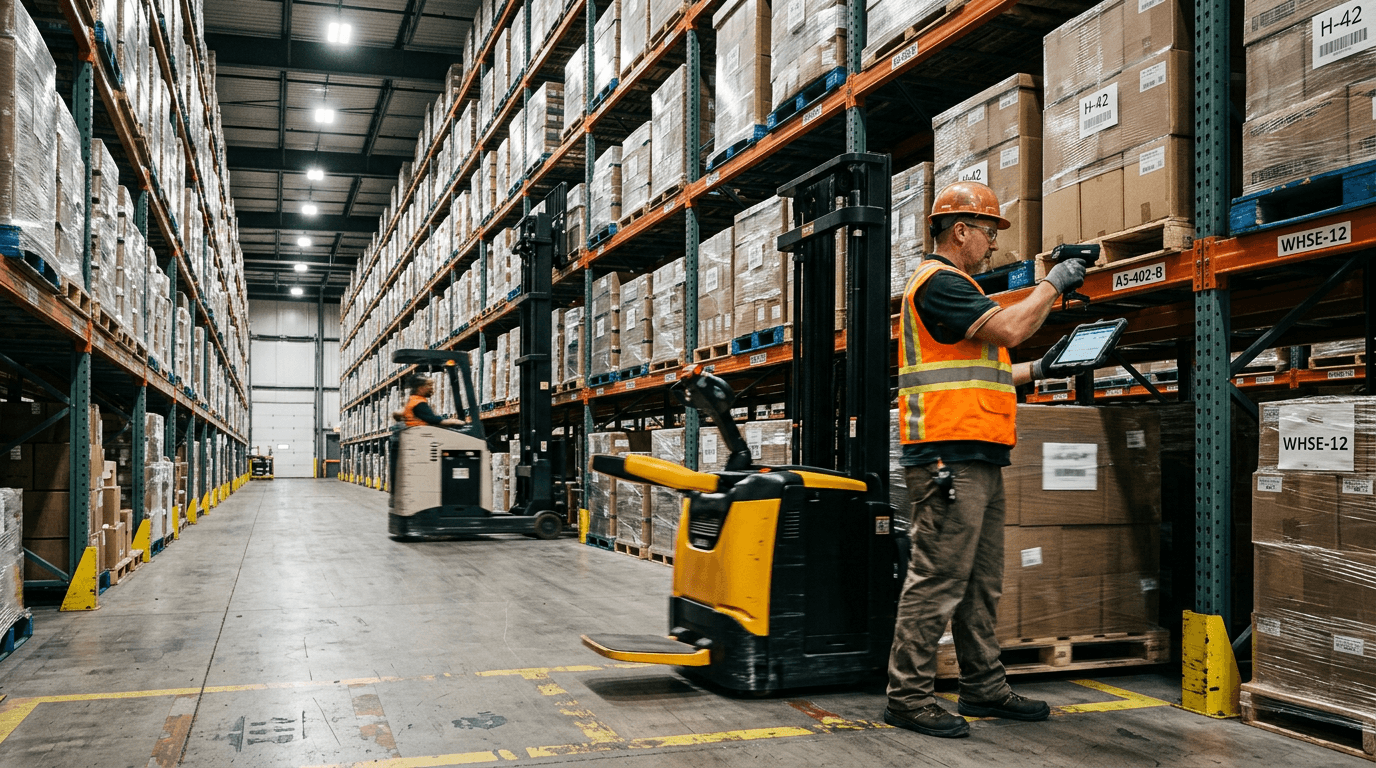
Logistics and supply chain platforms must orchestrate carriers, customs, warehouses, and customers with exception workflows that operators can clear quickly during exceptions. Neojn builds control towers, TMS and WMS integrations, and partner portals with SLAs finance can reconcile. Visibility alone does not improve outcomes; the combination of visibility, decision support, and workflow automation is what turns raw signal into the coordinated response that protects service levels during peak demand or disruption.
Supply chain visibility platforms, port and yard management software, and customs integration services map to integration-heavy programs where ownership of events, retries, and reconciliation must be explicit. Neojn documents these ownership boundaries during discovery so the operational day reflects clear accountability rather than finger-pointing between carriers, 3PLs, and internal operations when exceptions arise. That clarity is what allows operators to act quickly rather than spending time investigating who should handle an issue.
Resilience scenarios including strikes, weather, port congestion, and cyber events need pre-approved playbooks with communications templates and decision criteria prepared before disruption hits. Neojn works with operations, customer service, and commercial teams to rehearse these scenarios on cadence. Customer commitments remain honest during disruption because the response plan is practiced rather than improvised, which preserves customer trust even during circumstances beyond the shipper or carrier's control.
Route optimization, load planning, and mode selection algorithms produce measurable savings when tuned to real operating conditions. Neojn implements optimization engines with constraints that reflect driver hours, equipment availability, customer delivery windows, and sustainability targets. That realism makes optimization outputs executable rather than theoretical, which is the difference between a modeling exercise and a capability that actually improves on-time delivery and cost per mile across the network during typical operations.
Warehouse automation ranges from simple conveyor integration through sophisticated robotics and automated storage and retrieval systems. Neojn implements automation that matches workflow, SKU profile, and labor constraints rather than applying generic templates. Integration with WMS, labor management, and equipment vendors follows governed interfaces so system reliability matches the physical reliability of the automated equipment. Downtime in automated warehouses amplifies impact, which makes integration quality especially important to day-one and ongoing operations.
Partner portals support carriers, 3PLs, customs brokers, and customers with role-appropriate visibility and transaction capabilities. Neojn designs partner experiences with self-service onboarding, governed APIs, and progressive disclosure so partner integration time shortens measurably. That onboarding efficiency matters because logistics networks grow and change continuously, and each partner addition should strengthen rather than strain the ecosystem of integrations that the business depends on.
Logistics & supply chain: FAQs
COOs, logistics technology leaders, and network planners.
Yes, where carriers and yards expose quality telemetry. Where not, exception workflows and predictive ETAs still improve customer experience.
Posting rules tie shipments, accruals, and claims to ERP with audit trails.
Warehouse automation resilience reports, AI supply chain governance articles, and integration outlook briefs align technology scope to network KPIs.
Logistics program flow
Network mapping through scaled partner onboarding.
Network and data discovery
Lanes, partners, documents, and systems are cataloged with pain points ranked.
Reference integration architecture
Events, master data, and monitoring are defined before heavy build.
Pilot corridor
One region or lane proves value, SLAs, and support models.
Scale and optimize
Partner onboarding kits and automation reduce time-to-connect for new carriers and sites.
Related sectors and services
Logistics touches retail, manufacturing, and energy supply chains.
Retail & eCommerce
Last-mile and omnichannel promises anchored in network visibility.
RetailManufacturing
Inbound materials and outbound finished goods coordination.
ManufacturingCloud & DevOps
Elastic scale for tracking bursts and global routing.
Cloud & DevOpsWebcomyi - store & delivery
Last-mile and store tasking when retail promises depend on logistics truth.
Webcomyi

Den ersten Release-Train mitgestalten
Wir moderieren eine gemeinsame Backlog-Session mit Business-Sponsoren und Control-Partnern, skizzieren Abhängigkeiten, Compliance-Gates und das kleinste lieferbare Stück, das Wert beweist – mit Ownern und Terminen für Ihr Steering.