


Response and restoration targets align to your incident tiers. Reporting shows trends, breaches, and root causes with remediation owners.
Service
Managed Services
24/7 managed operations, runbooks, patching, backup readiness, and SLAs aligned to your risk profile, regulatory expectations, and major incident command structures.
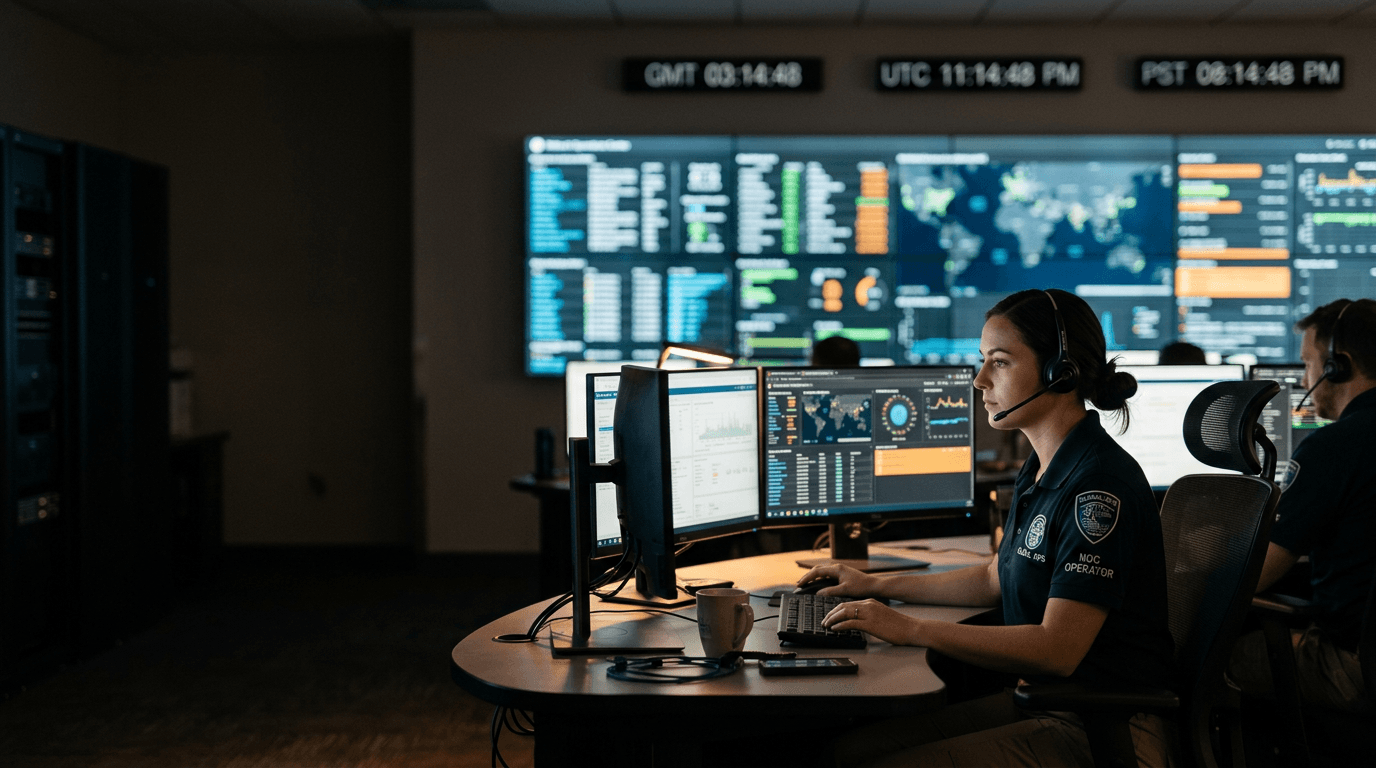
Our managed services practice pairs senior practitioners with your internal teams. We bring accelerators such as reference architectures, automation libraries, and governance templates, but every artifact is adapted to your standards and suppliers. Security-led engagements frequently map to the NIST Cybersecurity Framework when aligning engineering evidence with enterprise risk forums.
Engagements are milestone-based with explicit transfer criteria. You always know who operates what after we step back.
Across audits and incident reviews, teams value playbooks that match how Neojn delivers: named escalation paths, environment parity, and evidence captured in tools instead of slide-only narratives.
We document interfaces and ownership in runbooks your NOC and application teams can adopt without a second translation layer, so operational handoffs stay coherent after major releases.
Organizations evaluating managed IT services providers or NOC as a service want SLAs, runbooks, and escalation paths that match internal tiering, not opaque black boxes. Neojn aligns managed services to your change windows, regulatory expectations, and major incident command structures.
Keywords like 24/7 infrastructure monitoring, ITIL managed services, and backup and disaster recovery management reflect operational outcomes we document in service definitions and review cadences.
Focused offerings in this practice
Typical outcomes
We measure success in production metrics, not workshop outputs. Expect joint steering with transparent RAID logs and finance-friendly burn reports.
- Executive-ready roadmaps with explicit optionality each quarter.
- Automated compliance evidence aligned to your control framework.
- Runbooks and training for your command center before go-live.
Managed operations with governance your auditors recognize
Managed services succeed when scope, RACI, and tooling integrations are explicit from the first service definition workshop. Neojn ingests alerts from your existing stack where possible, augments gaps pragmatically, and avoids duplicate panes of glass that confuse responders during major incidents. That integration discipline keeps response times tight and reduces the familiar pattern where outsourced and internal teams run parallel monitoring from separate consoles with different thresholds and separate on-call rotations.
Patching, backup verification, and capacity reviews follow calendars agreed with application owners and compliance teams. Exceptions are tracked with risk acceptance workflows your risk committee can audit rather than sitting in undocumented email threads. Change windows respect business criticality: trading floors, payroll cycles, peak retail weekends, and academic schedules each shape when maintenance occurs. That coordination prevents the kind of avoidable friction that undermines trust between operations and the business partners they support.
Monitoring and observability posture receives careful attention because signal quality determines incident response quality. Alert tuning, runbook linkage, and dashboard ownership are documented so the NOC responds rather than interpreting each alert on first encounter. Observability spend is kept in check through coverage prioritization, because flooding engineers with low-value alerts is expensive and degrades real response during the incidents that actually matter to customer experience and business continuity.
Privileged access follows least-privilege principles with just-in-time elevation, session recording, and periodic access reviews. Break-glass procedures are rehearsed, not only documented, so emergency scenarios do not become security incidents in their own right. Credential rotation, service account governance, and workload identity practices cover the non-human access that many organizations overlook, and audit exports demonstrate compliance with internal standards and external frameworks during third-party assessments or regulator inquiries.
Incident management follows your tiering and escalation model rather than imposing a generic framework. Severity definitions, communication paths, and post-incident review cadences match how your organization already operates. Major incident bridges integrate with your crisis command structure, and regulatory notification support aligns to the supervisory regime that applies. Monthly reviews cover recurring issues, capacity trends, change failure rates, and improvement actions with named owners across internal and managed services teams.
Transition in and out is planned carefully from the beginning. Knowledge transfer, configuration exports, and parallel run periods protect the customer from vendor lock-in beyond healthy operational dependency. If the decision comes to insource specific functions or move to a different partner, Neojn documents the current state in a form that supports the transition rather than obscuring it. That discipline is what separates a managed services partnership from an opaque outsourcing arrangement that becomes hard to unwind.
Managed services: FAQs
IT operations, infrastructure, and procurement teams scoping outsourced run.
We prefer integrating with your ITSM, CMDB, and observability platforms. New tooling is justified when gaps block reliable detection or change tracking.
Just-in-time elevation, session recording, and periodic access reviews follow least privilege. Break-glass procedures are rehearsed.
The managed services buyer guide plus articles on observability coverage and incident runbooks give evaluation criteria beyond price per device.
Managed services onboarding
Discovery through steady state with continuous improvement reviews.
Service definition workshop
Scope, contacts, hours, and escalation matrices are agreed and signed.
Tooling and access integration
Monitoring, ticketing, and secure access land with audit-friendly controls.
Knowledge transfer
Runbooks are validated against real incidents and changes in a parallel window.
Operate and improve
Monthly reviews cover incidents, changes, capacity, and roadmap items.
Often paired with
Build and migrate programs that need a stable run team after go-live.
Cloud & DevOps
Platform reliability and FinOps after landing zones are live.
Cloud & DevOpsERP solutions
Hypercare extension and steady operations for finance cores.
ERP solutionsTelecom
High-availability operations for network-adjacent platforms.
TelecomData & AI
When managed pipelines include analytics jobs and model endpoints.
Data & AI

Vergleichen Sie uns mit dem Incumbent
Wir beantworten Ihre RFP-Abschnitte, vergleichen Delivery-Modelle mit Incumbents oder führen eine kostenlose Architektur-Review zu einem begrenzten Thema Ihrer Wahl – mit klaren Annahmen und wenigen Optionen, die Procurement bewerten kann.